When Every Step Starts Hurting More Than It Should
- At first, the pain only appears while climbing stairs.
- Then getting out of bed becomes uncomfortable.
- Walking longer distances feels exhausting.
Simple movements like bending the knee, standing for too long, sitting cross-legged, or even sleeping comfortably slowly become daily struggles. Many people spend years trying painkillers, physiotherapy, knee braces, injections, supplements, and home remedies hoping the discomfort will eventually improve. But when the knee joint becomes severely damaged, stiff, and constantly painful, Knee Replacement Surgery may become the treatment that finally restores movement, comfort, and independence. For many patients, this procedure is about far more than replacing a damaged joint. It is about returning to a life where walking, traveling, sleeping, and daily activities no longer revolve around pain.
The Knee Joint: Why it Starts Wearing Down
The knee is one of the hardest-working joints in the body. It supports body weight, absorbs impact, maintains balance, and allows smooth movement throughout the day.
Inside a healthy knee:
• Cartilage cushions the ends of the bones
• Ligaments stabilize the joint
• Muscles provide strength and support
• Synovial fluid keeps movement smooth and friction-free
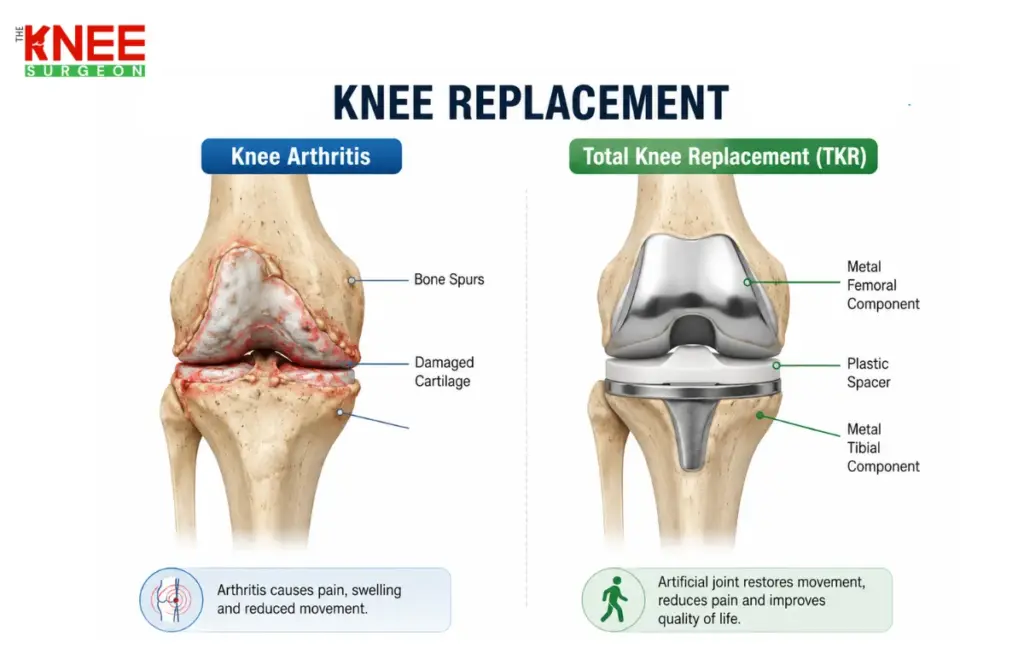
Over time, aging, arthritis, obesity, injuries, inflammation, and repetitive stress can gradually damage these structures.
As cartilage wears away:
• Bones begin rubbing against each other
• Inflammation increases
• Joint stiffness develops
• Movement becomes painful
• Mobility gradually declines
In advanced stages, even routine activities can become physically exhausting and emotionally draining.
What Exactly is Knee Replacement Surgery?
Knee Replacement Surgery is a procedure in which damaged portions of the knee joint are removed and replaced with artificial components designed to reduce pain and improve movement.
The surgery is commonly recommended for:
• Severe osteoarthritis
• Rheumatoid arthritis
• Advanced joint degeneration
• Major cartilage damage
• Chronic stiffness
• Knee deformity
• Persistent pain affecting quality of life
The artificial joint components are usually made from:
• Metal alloys
• Medical-grade plastic
• Ceramic materials
These implants are designed to mimic natural knee movement while improving stability, alignment, and joint function.
The Silent Progression of Knee Damage
One reason many patients delay treatment is because knee degeneration usually develops slowly over several years.
Early symptoms may include:
• Mild morning stiffness
• Pain after long walks
• Occasional swelling
• Cracking or grinding sounds
• Difficulty climbing stairs
As the condition progresses, patients may experience:
• Constant pain even during rest
• Reduced walking ability
• Knee instability
• Joint deformity
• Sleep disturbance caused by pain
• Reduced physical activity
Many people gradually adjust their lifestyle around knee pain before realizing how severely it has affected their independence and overall well-being.
Signs You May Need Knee Replacement Surgery
Not every knee problem requires surgery. Many patients improve with medications, physiotherapy, weight management, injections, and lifestyle modifications.
However, surgery may be recommended when conservative treatments no longer provide meaningful relief.
Common warning signs include:
• Persistent pain despite treatment
• Difficulty walking or climbing stairs
• Severe stiffness limiting movement
• Chronic swelling and inflammation
• Advanced arthritis visible on scans
• Pain interfering with sleep
• Reduced quality of life
• Knee deformity or instability
One of the clearest indicators is when everyday activities continue becoming more difficult despite long-term non-surgical treatment.
Types of Knee Replacement Surgery
- Total Knee Replacement: The entire damaged knee joint is replaced with artificial components. This is the most commonly performed procedure and is often recommended for advanced arthritis affecting multiple areas of the knee.
- Partial Knee Replacement: Only the damaged section of the knee is replaced. This may be suitable when arthritis is limited to one compartment while the remaining structures remain healthy.
- Bilateral Knee Replacement: Both knees are replaced either during the same surgery or through separate procedures. This may be considered for patients with severe arthritis affecting both joints.
- Revision Knee Replacement: This procedure is performed when a previous implant becomes loose, worn out, infected, or damaged over time.
What Many Patients Fear Before Surgery
For many individuals, the fear surrounding surgery is often greater than the procedure itself.
Common concerns include:
• Fear of post-surgical pain
• Anxiety about walking again
• Worry about complications
• Concerns about recovery time
• Fear of losing independence
• Uncertainty about returning to normal life
These fears are understandable.
Fortunately, modern surgical techniques, improved anesthesia, advanced pain management, minimally invasive approaches, and structured rehabilitation programs have significantly improved recovery experiences for many patients.
What Happens Before Surgery?
Proper preparation plays an important role in recovery and long-term results.
Doctors usually evaluate:
• Overall health condition
• Blood investigations
• Heart and lung function
• X-rays or MRI scans
• Existing medical conditions
• Weight and muscle strength
• Mobility limitations
Patients may also receive guidance regarding:
• Pre-surgery strengthening exercises
• Weight management
• Diabetes control
• Smoking cessation
• Nutrition improvement
• Preparing the home for recovery
Better physical preparation often supports smoother rehabilitation and improved surgical outcomes.
Inside the Operating Room
How the Procedure Works. During Knee Replacement Surgery:
• Damaged cartilage and bone are carefully removed
• Joint surfaces are reshaped
• Artificial implants are positioned precisely
• The knee is aligned to improve stability and movement
The procedure is usually performed under spinal or general anesthesia and may take several hours depending on the complexity of the condition. Most patients remain in the hospital for a few days before continuing recovery at home or through rehabilitation programs.
Modern surgical advancements now focus on:
• Smaller incisions
• Better implant alignment
• Reduced blood loss
• Faster recovery protocols
• Improved implant durability
• Enhanced precision using computer-assisted technology
Recovery
The Part Most Patients Underestimate. Surgery is only one part of the healing journey. Rehabilitation and physiotherapy are equally important for long-term success.The first few days after surgery can feel physically and emotionally challenging. Standing, walking, bending the knee, or performing routine movements may initially feel uncomfortable.
However, gradual progress often becomes highly motivating as strength and mobility improve week by week.
The early recovery phase usually includes:
• Pain management
• Assisted walking
• Knee mobility exercises
• Muscle strengthening
• Balance and walking training
Most patients are encouraged to begin movement within a day after surgery because early activity helps:
• Improve circulation
• Reduce blood clot risk
• Prevent stiffness
• Support faster healing
A General Recovery Timeline
First Week
• Walking begins with assistance
• Swelling and discomfort are common
• Physiotherapy starts immediately
First Month
• Walking gradually improves
• Knee flexibility slowly increases
• Daily activities become easier
Three Months
• Significant improvement in strength and mobility
• Reduced pain during movement
• Better independence
Six Months and Beyond
• Continued strengthening
• Improved walking confidence
• Greater participation in normal activities
Full recovery varies depending on
• Age
• Overall fitness
• Muscle strength
• Weight
• Rehabilitation consistency
• Existing medical conditions
Patients who remain consistent with physiotherapy often experience better long-term mobility and function.
Life After Knee Replacement Surgery
For many patients, the improvements after surgery can feel life-changing.
Common benefits include
• Significant reduction in chronic pain
• Improved walking ability
• Better sleep quality
• Greater independence
• Easier participation in daily activities
• Improved emotional well-being
Many patients successfully return to
• Walking
• Traveling
• Swimming
• Cycling
• Light recreational activities
Doctors often recommend
• Maintaining a healthy body weight
• Staying physically active
• Avoiding excessive high-impact activities
• Continuing strengthening exercises
• Attending regular follow-up visits
Modern knee implants can often last 15–20 years or longer when properly maintained.
Risks and Complications to Understand
Like any major surgery, Knee Replacement Surgery carries certain risks.
Possible complications may include
• Infection
• Blood clots
• Implant loosening
• Joint stiffness
• Nerve or blood vessel injury
• Persistent discomfort
• Reduced range of motion
Fortunately, advances in surgical safety, infection prevention, anesthesia, and rehabilitation have significantly improved success rates worldwide.
The Emotional Side of Chronic Knee Pain
Severe knee pain affects far more than physical movement alone.
Many patients also experience:
• Loss of confidence
• Reduced social interaction
• Frustration and irritability
• Sleep disturbances
• Anxiety about movement
• Emotional exhaustion
• Dependence on others for routine tasks
Over time, chronic pain can quietly affect relationships, emotional well-being, independence, and overall quality of life. For many individuals, successful treatment restores not only mobility, but also confidence, freedom, and participation in daily life.
Common Myths About Knee Replacement Surgery
“Only elderly people need knee replacement.”
Younger adults with severe arthritis, injuries, or long-term joint damage may also require surgery.
“Recovery takes years.”
With proper rehabilitation, many patients regain substantial mobility within months.
“Artificial knees never feel natural.”
Modern implant designs and physiotherapy techniques have greatly improved comfort and movement quality.
“You can never be active again.”
Many patients successfully return to walking, swimming, travel, and other low-impact activities after recovery.
“Knee pain always means surgery is necessary.”
Many knee conditions improve with non-surgical treatment. Surgery is usually considered only when conservative options no longer provide relief.
Prevention
Protecting Your Knees Before Surgery Becomes Necessary
Not all knee degeneration can be prevented, especially with aging, genetics, or inflammatory diseases. However, healthy habits may help reduce long-term joint damage and delay deterioration.
- Maintain a healthy body weight: Excess body weight places constant pressure on the knees and accelerates cartilage wear.
- Strengthen the muscles around the knee: Strong thigh and leg muscles help stabilize the joint and reduce stress during movement.
- Choose joint-friendly exercise: Low-impact activities such as walking, cycling, swimming, and stretching help maintain flexibility without excessive strain on the knees.
- Avoid repetitive stress and poor movement mechanics: Improper exercise technique, repetitive strain, and excessive high-impact activity may contribute to faster joint degeneration.
- Treat knee injuries early: Untreated ligament tears, cartilage injuries, and instability can increase the risk of arthritis later in life.
- Stay physically active: Regular movement improves circulation, flexibility, muscle support, and overall joint health.
- Manage inflammatory conditions properly: Early treatment of arthritis and inflammatory diseases may help slow joint destruction and preserve mobility.
Conclusion
More Than Just Joint Surgery. Knee Replacement Surgery is often viewed as a final treatment option. But for many people living with severe pain, stiffness, reduced mobility, and declining quality of life, it becomes a life-changing procedure that restores movement, confidence, comfort, and independence.The goal is not simply replacing damaged cartilage and bone.
The real goal is helping people return to a life where pain no longer controls every movement, every decision, and every step they take. Early evaluation and timely treatment can help prevent years of unnecessary pain and support long-term joint function before mobility becomes severely limited.