Safety Rate
Knee pain often does not arrive as a sudden problem. It usually develops gradually, a little stiffness in the morning, discomfort while climbing stairs, avoiding long walks, or slowing down activities that were once effortless.
When arthritis or other joint conditions cause irreversible damage, knee replacement surgery can provide a long term solution by replacing the damaged surfaces of the knee joint with an artificial implant. The goal is not simply to reduce pain, but to restore smoother movement, improve stability, and help patients regain independence.
However, successful knee replacement depends on much more than the implant itself. Accurate diagnosis, choosing the right procedure, surgical precision, appropriate technology, and a structured rehabilitation plan all contribute to achieving the best possible outcome.
For patients looking for knee replacement surgery in Chennai, Dr. Vijay Kumar Sohanlal provides advanced joint replacement care with a patient focused approach, combining surgical expertise with personalised treatment planning to help individuals return to an active lifestyle.
Not everyone with knee pain requires surgery. However, knee replacement surgery in Chennai is recommended for patients experiencing:
Patients aged 50+ are the most common candidates, but younger individuals with severe joint damage may also benefit from total knee replacement surgery in Chennai.
Every knee is different. The extent of damage, location of arthritis, ligament condition, bone health, activity expectations, and overall medical condition all influence which type of knee replacement is most suitable.
The purpose of surgery is not simply to replace the damaged joint, but to restore a knee that feels stable, functional, and appropriate for the patient's lifestyle.
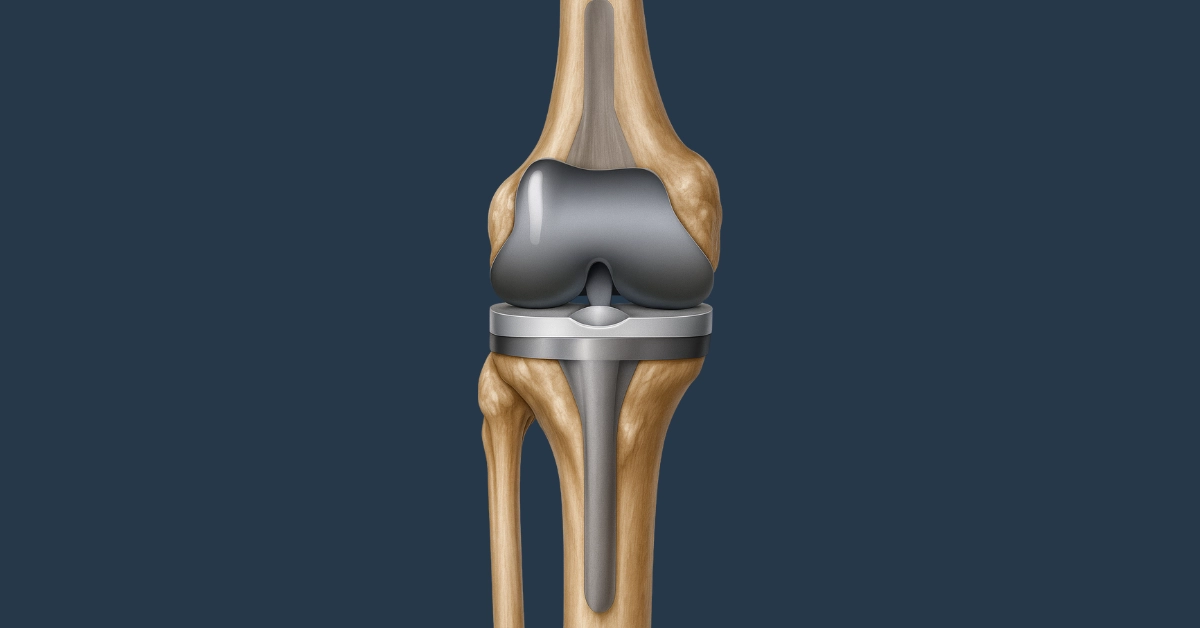
Total knee replacement (TKR) is the most commonly performed knee replacement procedure and is generally recommended when arthritis affects multiple areas of the knee joint.
During the procedure, the damaged cartilage and bone surfaces are carefully removed and replaced with artificial components designed to recreate the function of a healthy knee.
It is commonly considered for patients with:
For suitable patients, total knee replacement can provide substantial improvement in pain, mobility, and confidence while performing routine movements.
Not all arthritis affects the entire knee. In some patients, damage is limited to one specific compartment of the joint.
Partial knee replacement, also called unicompartmental knee replacement, focuses only on the damaged area while preserving healthy bone, cartilage, and supporting structures.
This approach may provide benefits such as:
However, partial replacement is suitable only for carefully selected patients. A detailed evaluation is required to determine whether the remaining knee structures can support this approach.
A small number of patients may require revision knee replacement after a previous implant develops complications.
Revision surgery is more complex because the surgeon must address the reason behind the earlier problem while rebuilding a stable knee.
It may be considered for issues such as:
Successful revision surgery requires advanced planning and experience in managing complex joint conditions.
For many patients, the decision to undergo knee replacement treatment in Chennai is not only about treating pain. It is about regaining the ability to live independently and participate in activities that have gradually become difficult.
A successful knee replacement can provide improvements in several important areas.
The primary purpose of knee replacement is to remove the painful effects of damaged joint surfaces.
By replacing worn out areas with an artificial implant, the procedure reduces the friction and irritation responsible for chronic arthritis pain.
Many patients experience improvement in:
A painful knee often causes people to reduce their activity levels. Over time, this can lead to muscle weakness and further loss of confidence.
After recovery, many patients are able to gradually return to activities such as:
The aim is not simply a better knee, it is a more active and independent lifestyle.
One of the most meaningful changes patients experience is the return of confidence. Many individuals who previously avoided movement due to fear of pain begin feeling comfortable participating in daily activities again.
This improvement often extends beyond physical health, positively affecting emotional well being and overall quality of life.
One of the most common questions patients ask is whether robotic knee replacement is better than traditional surgery.
The answer depends on individual factors. Both techniques aim to achieve the same outcome: a stable, well functioning knee that provides long term relief.
The main difference is the level of technology used during surgical planning and execution.
| Aspect | Traditional Knee Replacement | Robotic-Assisted Knee Replacement |
|---|---|---|
| Surgical Planning | Based on clinical assessment, imaging, and surgeon expertise | Uses advanced digital planning based on the patient's knee anatomy |
| Surgical Guidance | Performed using proven surgical techniques | Provides additional computer-assisted guidance during key steps |
| Implant Positioning | Determined using conventional methods | Allows highly personalized planning for implant placement |
| Role of Surgeon | Surgeon performs and controls the procedure | Surgeon performs the procedure with additional technological support |
| Suitability | Effective for many patients when performed appropriately | Particularly useful in selected cases requiring detailed planning |
Knee replacement in Chennai is used to treat several underlying conditions, all of which share one common feature: they destroy the cartilage and structural integrity of the knee joint.
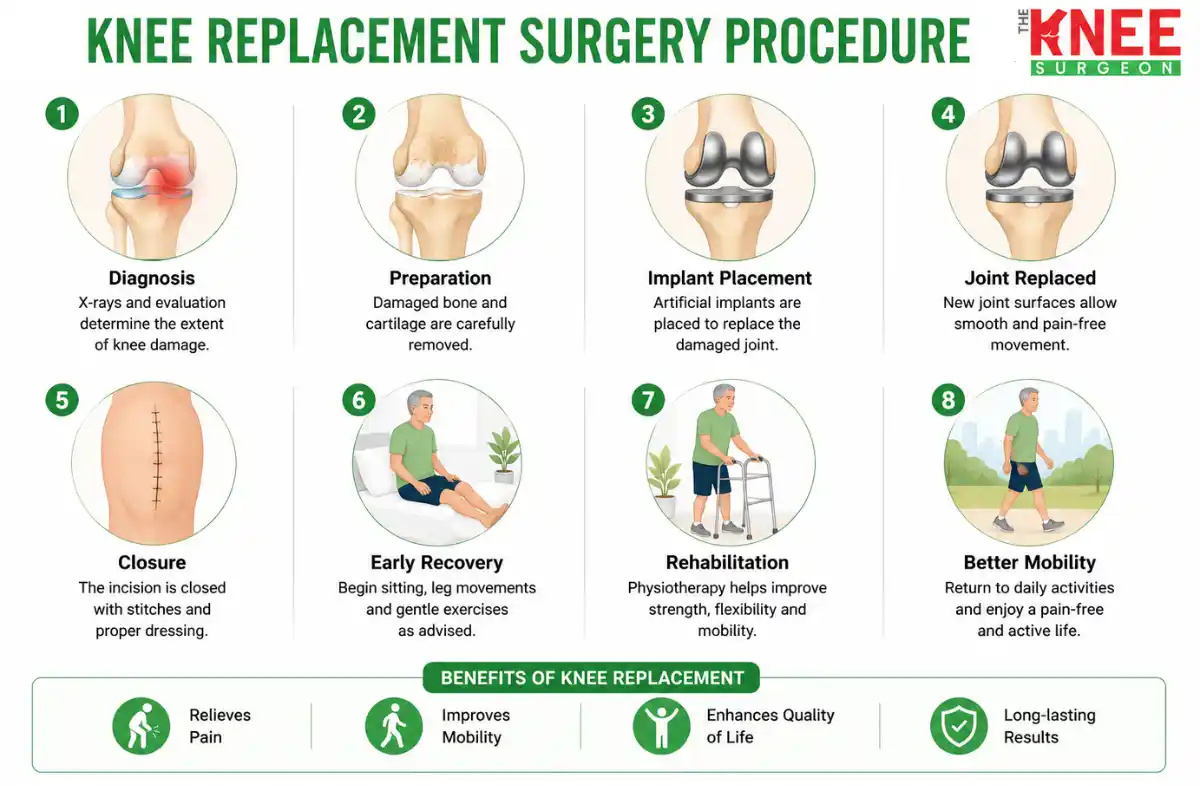
Understanding the surgical journey helps patients feel more prepared and confident before treatment.
Before surgery, the surgeon performs a detailed evaluation to understand both the condition of the knee and the patient's expectations.
This includes assessing:
This planning helps determine the most appropriate surgical approach and implant strategy.
During surgery, the damaged portions of the knee are carefully removed.
The goal is to create balanced surfaces that allow the artificial components to function smoothly while maintaining proper knee alignment.
Artificial components are positioned to recreate the movement of the natural knee.
The surgeon carefully evaluates:
This step is critical because proper balance contributes to long term function and comfort.
Before finishing the procedure, the knee is checked to ensure that:
Once the surgical team is satisfied with the function, the procedure is completed.
Knee replacement has evolved significantly over the years. Modern techniques focus on improving precision, personalisation, and recovery outcomes.
Robotic technology allows surgeons to create a detailed understanding of the patient's knee before surgery.
It can help in:
The technology is especially valuable in cases where precise correction and detailed planning are required.
Modern knee replacement may involve advanced digital tools that help surgeons evaluate alignment, balance, and implant placement.
This allows treatment decisions to be based on the patient's unique anatomy rather than a one size fits all approach.
Modern implants are developed to provide durability, stability, and smoother movement.
The choice of implant depends on factors such as:
Knee replacement surgery begins the process of restoring mobility, but recovery is shaped by healing, rehabilitation, and consistent effort. Every patient progresses differently depending on age, overall health, muscle strength, and activity level before surgery.
The focus is not only on healing the operated knee, it is about rebuilding confidence, strength, and independence step by step.
The initial recovery phase focuses on helping the body heal while safely introducing movement. Under the guidance of the medical and rehabilitation team, patients begin gentle activities that support circulation, reduce stiffness, and prepare the knee for further recovery.
Key goals during this phase include:
This phase focuses on rehabilitation and improving the function of the muscles surrounding the new knee joint. Regular physiotherapy helps patients gradually regain movement and independence.
Important recovery milestones include:
As healing progresses, patients continue improving strength, balance, and coordination. The focus shifts from basic recovery to rebuilding an active and comfortable lifestyle.
During this stage, many patients work towards:
A successful knee replacement is not only about recovery after surgery, it is also about maintaining the health and function of the new joint for years to come.
Long term care focuses on:
The cost of knee replacement surgery in Chennai varies depending on several factors because every patient requires an individualised treatment plan.
The overall expense may depend on:
| Factor | How It Influences Treatment Cost |
| Type of procedure | Total, partial, robotic assisted, or revision surgery may involve different requirements |
| Implant selection | Implant design, material quality, and suitability influence planning |
| Surgical expertise and hospital care | Experience, safety standards, and facilities contribute to overall treatment quality |
| Pre operative evaluation | Tests and medical preparation may vary based on patient health |
| Rehabilitation support | Physiotherapy and follow up care are important parts of recovery |
While cost is an important consideration, patients should also evaluate the overall value of treatment, including surgical expertise, safety, technology, rehabilitation support, and long term outcomes.
A detailed consultation helps patients understand the recommended procedure and expected investment for knee replacement surgery in Chennai based on their specific condition.
Choosing the right surgeon is one of the most important decisions in a knee replacement journey. Beyond surgical skill, patients need a specialist who understands their goals, explains options clearly, and provides support throughout recovery.
Dr. Vijay Kumar Sohanlal is a trusted orthopaedic and joint replacement surgeon based in Chennai, with over 18+ years of experience treating knee arthritis and complex joint conditions. He holds advanced fellowship training in Germany and Australia, and previously served as Senior Joint Replacement Surgeon at MGM Healthcare and Clinical Lead for Robotic Joint Replacement at Medway Hospitals. He currently leads joint replacement and regenerative care at Mahi Multispecialty Hospital, Kilpauk, Chennai.
Dr. Vijay Kumar Sohanlal has extensive experience in knee replacement procedures, including conventional and robotic assisted approaches.
His expertise allows him to manage a wide range of cases, from routine arthritis related replacements to more complex situations requiring careful planning.
No two knees are exactly alike. The ideal treatment approach depends on the patient's symptoms, lifestyle, expectations, and joint condition.
Dr. Vijay Kumar Sohanlal focuses on:
Advanced technology can improve surgical planning, but it is most effective when combined with clinical expertise.
His approach integrates:
Successful knee replacement is a journey that continues after surgery.
Comprehensive care includes:
The focus remains on helping patients regain confidence and long term function. Patients considering knee replacement treatment in Chennai can consult Dr. Vijay Kumar Sohanlal for a personalised evaluation.
Knee replacement is one of the safest and most reliable surgical procedures available, with a success rate consistently above 95 percent. However, like any surgery, it carries a small degree of risk that every patient should be aware of.
Living with severe knee pain can gradually reduce independence, confidence, and the ability to enjoy everyday experiences. But advanced knee damage does not mean giving up the activities that matter most. With modern knee replacement techniques, personalized surgical planning, and dedicated rehabilitation, many patients are able to move forward with improved comfort and confidence.
For those considering knee replacement surgery in Chennai, consulting an experienced joint replacement specialist like Dr. Vijay Kumar Sohanlal can help you understand your condition, explore the right treatment options, and take a confident step towards a more active future.
Knee replacement surgery usually takes about 1–2 hours to complete. The duration depends on whether it is total, partial, or robotic surgery. Complex cases like revision surgery may take longer. Pre-surgical preparation and post-operative monitoring add extra time. An experienced surgeon ensures efficiency and safety during the procedure.
During surgery, you won’t feel pain due to anesthesia. Post-surgery discomfort is managed with medications and care. Modern techniques like minimally invasive surgery reduce pain levels. Pain gradually decreases within a few weeks after surgery.
Most patients experience significant long-term pain relief.
Modern knee implants are designed for long term durability. Their lifespan depends on factors such as implant quality, activity level, body weight, and overall joint care.
Most patients start walking within 24–48 hours after surgery. Initially, support like a walker or crutches is required. Physiotherapy begins early to improve mobility and strength. Walking ability improves steadily over the first few weeks. Independent walking is usually possible within 4–6 weeks.
Robotic-assisted surgery offers high precision and accuracy. It helps in better alignment of the knee implant. This leads to improved function and longer implant life. Patients often experience faster recovery and less pain. It is especially beneficial in complex knee replacement cases.
High-impact activities like running and jumping should be avoided. Heavy lifting can put stress on the new knee joint. Sudden twisting or jerky movements may cause injury. Low-impact activities like walking and cycling are recommended. Following doctor guidance ensures long-term implant success.
Bilateral knee replacement may be considered for selected patients after evaluating overall health, medical suitability, and potential surgical risks.
Knee replacement may be considered when ongoing pain, stiffness, and reduced mobility continue despite appropriate treatments and begin affecting daily activities and quality of life.
Robotic assisted knee replacement provides additional planning and precision support, but the best approach depends on individual factors and the surgeon’s recommendation.
Recovery varies between patients. Most individuals gradually improve mobility within weeks, while strength and confidence continue developing over several months with rehabilitation.
Take the first step towards pain-free living. Book your consultation today and discover personalized treatment options tailored to your needs.