
Medically reviewed by: Dr. Vijay Kumar Sohanlal, MBBS, MS (Orthopaedics), Orthopaedic and Joint Replacement Surgeon, Founder and Owner, MAHI Multispecialty Hospital, Kilpauk, Chennai
Last medically reviewed: September 2026
Waking up one morning and finding that lifting your arm to brush your hair, reach for a cupboard, or put on a shirt has suddenly become painful is more common than most people realize. In my clinic in Chennai, I see this pattern almost every week. A patient dismisses the first twinge as a minor strain, and by the time they book an appointment for frozen shoulder treatment, the stiffness has already started interfering with sleep and daily routine. That gradual, quietly worsening loss of shoulder movement usually points to one condition: frozen shoulder.
Frozen shoulder is not just shoulder pain. Left unmanaged, it can disrupt sleep, work, and basic independence for months at a time. The reassuring part, based on what I see across hundreds of cases a year, is that with the right frozen shoulder treatment plan and consistent follow through, most patients recover full or near full shoulder function.
What is a Frozen Shoulder?
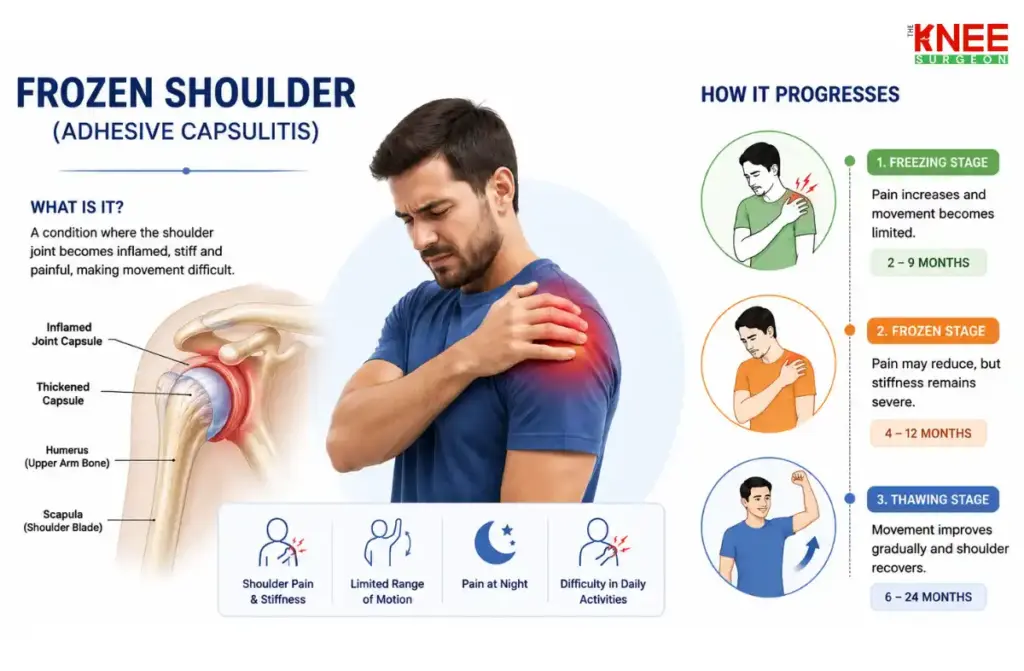
Frozen shoulder, medically known as adhesive capsulitis, occurs when the capsule surrounding the shoulder joint thickens and tightens, restricting movement and causing pain. Research published in peer reviewed orthopaedic journals estimates that it affects roughly 2 to 5 percent of the general population, most often adults between 40 and 60 years old, and it tends to occur more frequently in women.
Unlike a pulled muscle, a frozen shoulder does not resolve in a few days. Without treatment, it can run its course over one to three years.
The Three Stages of Frozen Shoulder
- Freezing stage: Pain builds gradually and movement becomes more restricted. This stage typically lasts 2 to 9 months.
- Frozen stage: Pain often eases somewhat, but stiffness becomes more pronounced and daily tasks grow harder. This stage generally lasts 4 to 12 months.
- Thawing stage: Mobility slowly returns. Full recovery can take anywhere from 6 months to 2 years.
Recovery timeline at a glance Freezing stage: 2 to 9 months Frozen stage: 4 to 12 months Thawing stage: 6 to 24 months
Symptoms to Watch For
Symptoms usually build slowly rather than appearing overnight.
- Persistent shoulder pain: A deep, dull ache in the joint and upper arm that often worsens with movement
- Progressive stiffness: Everyday actions like reaching overhead or behind the back become difficult
- Reduced range of motion: Simple tasks such as fastening a seatbelt or reaching a top shelf feel out of reach
- Pain at night: Many patients tell me their pain is worse lying down, especially on the affected side
- Struggles with daily tasks: Dressing, driving, cooking, and grooming can all become frustrating
- Muscle weakness: Reduced use of the arm over time can lead to secondary weakness in the surrounding muscles
A common misconception: Many patients assume the name “frozen shoulder” means cold weather is the cause. It is not. The term refers only to the severe stiffness in the joint, not temperature.
What Causes a Frozen Shoulder?
The exact trigger is not always identifiable, but several factors consistently show up in patients I treat:
- Shoulder injury: Fractures, dislocations, or rotator cuff tears can set off inflammation and stiffness
- Shoulder surgery: Recovery periods that limit movement raise the risk
- Prolonged immobilization: Keeping the shoulder still for an extended time after an injury or illness allows the capsule to tighten
- Diabetes: People with diabetes are significantly more likely to develop frozen shoulder than those without it
- Thyroid disorders: Both overactive and underactive thyroid conditions have a documented link to frozen shoulder
- Heart disease and stroke history: Certain cardiovascular and neurological conditions raise the likelihood of shoulder stiffness
Who is Most at Risk?
- Adults aged 40 to 60: The condition is most common in this age group
- Women: More frequently affected than men
- People with diabetes: One of the strongest known risk factors
- Patients recovering from surgery: Particularly shoulder, breast, or chest procedures, where the arm is kept still during healing
- People with chronic conditions: Including heart disease, Parkinson’s disease, and thyroid disorders
Frozen Shoulder Treatment Options
Treatment focuses on three goals: reducing pain, restoring movement, and preventing long term stiffness. In my practice, I usually start conservatively and escalate only if the response is inadequate.
- Pain relief medication: Anti inflammatory drugs help manage discomfort and support mobility work
- Physical therapy: A structured program of stretching and strengthening, tailored to the stage of the condition, is the backbone of most recovery plans
- Corticosteroid injections: These reduce inflammation and can provide meaningful, though often temporary, pain relief, particularly useful early in the freezing stage
- Hydrodilatation: A procedure where sterile fluid is injected into the shoulder capsule to gently stretch tight tissue
- Manipulation under anesthesia: For select cases with severe restriction, the shoulder is moved through its range while the patient is under anesthesia
- Arthroscopic capsular release: Rarely needed, this is considered only when conservative treatment has been given a genuine trial and has not worked
Which Treatment Works Best?
Based on both clinical evidence and what I see across my own patient base, physical therapy combined with a consistent home exercise routine gives the best long term outcomes for most people. Surgery is reserved for persistent, severe cases that do not respond after several months of conservative care.
Frozen Shoulder Exercises You Can Start With
Regular, gentle movement is one of the most effective tools for restoring flexibility.
- Pendulum stretch: Lean forward slightly and let the affected arm swing gently in small circles. This loosens the joint and eases stiffness.
- Finger walk: Face a wall and slowly walk your fingers upward as far as comfortable. This improves shoulder elevation over time.
- Towel stretch: Hold a towel behind your back and gently pull upward with the opposite hand to build flexibility.
- Cross body stretch: Bring the affected arm across your chest and hold gently to stretch the back of the shoulder.
- Armpit stretch: Rest the affected arm on a stable surface and bend your knees slightly to deepen the stretch.
Exercise Safety Checklist
- Warm up before stretching
- Move slowly and gently, never with sudden jerks
- Stop immediately if you feel sharp pain
- Practice consistently rather than intensely
- Follow your physiotherapist’s specific guidance
Mild discomfort during stretching is expected. Sharp or severe pain is not, and is a sign to stop and check in with your doctor.
Supportive Home Care
These measures will not cure a frozen shoulder on their own, but they can meaningfully ease symptoms alongside proper treatment.
- Warm compresses: Applying heat before exercise relaxes the muscles and improves flexibility
- Cold therapy: Ice packs after activity help reduce soreness and inflammation
- Gentle yoga: Certain poses support mobility and reduce stiffness when done carefully
- Anti inflammatory foods: Omega 3 rich foods, leafy greens, berries, nuts, and whole grains support joint health
- Good posture: Reduces unnecessary strain on the shoulder
- Adequate rest paired with gentle movement: Complete inactivity slows recovery just as much as overuse does
Daily Recovery Tips
- Avoid keeping the shoulder completely inactive
- Maintain good sitting posture through the day
- Stay generally active
- Stick to your prescribed exercise routine
- Keep blood sugar controlled if you are diabetic
- Attend physiotherapy sessions as scheduled, not only when pain flares
When to See a Doctor
Mild shoulder discomfort can sometimes improve with home care, but you should get a medical evaluation if:
- Pain continues for several weeks without improvement
- Shoulder movement keeps decreasing
- Sleep is regularly disrupted by pain
- Daily activities are becoming difficult
- Symptoms started after an injury or surgery
- Home treatment has not helped
Earlier diagnosis generally means a shorter, more manageable recovery.
Conclusion
Frozen shoulders can be frustrating and disruptive, but it is also a condition that responds well to patience, the right treatment plan, and consistent rehabilitation. Every stretch and every physiotherapy session contributes to regaining movement and confidence.
If shoulder stiffness or pain is starting to limit your daily life, do not wait for it to resolve on its own. Book a consultation to get an accurate diagnosis and a treatment plan suited to your stage of recovery.
Read More: Robotic knee Surgeon in Tamil Nadu