
What is Back Pain?
Back pain is something almost everyone experiences at some point in life. It can feel like a dull ache, stiffness, or even sharp pain that makes it hard to sit, stand, or move comfortably. For many people, especially those who sit for long hours or lead a sedentary lifestyle, back pain has become a daily problem. The good news is that you don’t always need medication to manage it. Practicing yoga asanas for back pain is a natural and effective way to reduce discomfort, improve flexibility, and strengthen your spine.
Common Causes of Back Pain
Back pain doesn’t just happen suddenly — it usually builds up over time. Some of the most common causes include:
- Sitting for long hours without proper posture
- Working on laptops or phones for extended periods
- Lack of physical activity
- Muscle strain from lifting heavy objects
- Sudden movements or injuries
- Stress, which tightens muscles
Understanding what’s causing your pain helps you choose the right yoga poses for back pain and avoid worsening the problem.
Types of Back Pain (Acute vs Chronic)
Back pain is generally classified into two types:
- Acute Back Pain: This is short-term pain that lasts for a few days or weeks. It often happens due to a minor injury or strain.
- Chronic Back Pain: This is long-term pain that lasts for more than 12 weeks and may require ongoing care.
No matter the type, practicing easy yoga poses for back pain regularly can help improve your condition over time.
How Yoga Helps in Relieving Back Pain
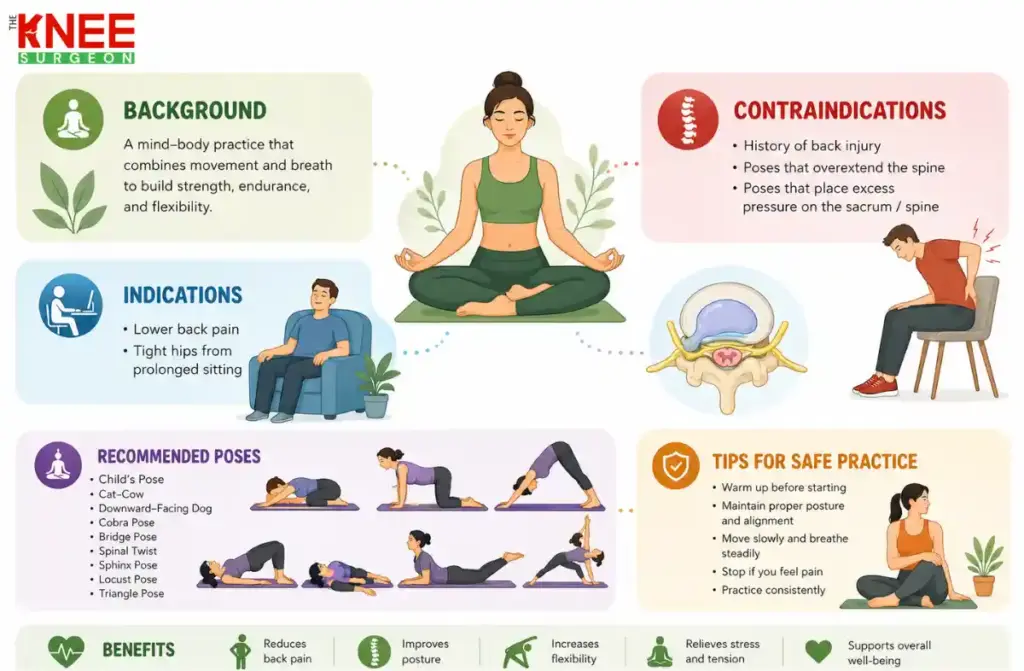
Yoga is more than just stretching — it works on your entire body and mind. Regular practice of yoga asanas for lower back pain helps reduce discomfort and prevents future issues.
- Improves Flexibility and Mobility: When your muscles are tight, your movements become restricted, which leads to pain. Yoga gently stretches these muscles, making your body more flexible and reducing stiffness.
- Strengthens Core and Spine Muscles: Your core muscles support your spine. Weak core muscles can put extra pressure on your back. Many yoga poses for back pain focus on strengthening these areas, helping your spine stay supported and stable.
- Reduces Stress and Muscle Tension: Stress can cause your muscles to tighten, especially in your back and shoulders. Yoga helps calm your mind and relax your muscles, which reduces pain naturally.
Best Yoga Asanas for Back Pain
Practicing the right yoga asanas for back pain can help reduce stiffness, improve flexibility, and strengthen your spine. The key is to start slowly and focus on proper technique rather than intensity.
Below are some simple, safe, and effective yoga poses for back pain that you can easily
Cat-Cow Pose (Marjariasana–Bitilasana)
This is one of the most recommended easy yoga poses for back pain, especially for beginners. It gently stretches and mobilizes the spine, helping reduce stiffness and improve flexibility.
How to do it:
- Start on your hands and knees (tabletop position)
- Keep your wrists under your shoulders and knees under your hips
- Inhale and drop your belly down, lifting your head and tailbone (Cow Pose)
- Exhale and round your spine upward, tucking your chin to your chest (Cat Pose)
- Move slowly with your breath
Repeat: 8–10 breaths
Benefits:
- Improves spine flexibility
- Relieves tension in the back and neck
- Enhances blood circulation
Tip: Move gently and avoid forcing the stretch.
Child’s Pose (Balasana)
Child’s Pose is a deeply relaxing posture that gently stretches the lower back. It is one of the most soothing yoga poses for back pain, especially after a long day.
How to do it:
- Kneel on the floor and sit back on your heels
- Stretch your arms forward and lower your chest toward the floor
- Rest your forehead on the mat
Hold: 20–30 seconds or longer
Benefits:
- Relieves lower back tension
- Calms the nervous system
- Gently stretches the spine
Tip: Place a pillow under your chest if you feel discomfort.
Cobra Pose (Bhujangasana)
Cobra Pose is one of the most effective yoga asanas for lower back pain. It strengthens the spine and improves posture, especially for people who sit for long hours.
How to do it:
- Lie on your stomach with legs extended
- Place your palms under your shoulders
- Inhale and slowly lift your chest off the floor
- Keep your elbows slightly bent
Hold: 10–15 seconds
Benefits:
- Strengthens back muscles
- Improves spinal flexibility
- Opens up the chest and shoulders
Tip: Do not overextend—lift only as much as comfortable.
Bridge Pose (Setu Bandhasana)
Bridge Pose helps strengthen the lower back, glutes, and core. It is highly beneficial among yoga asanas for back pain.
How to do it:
- Lie on your back with knees bent
- Keep your feet hip-width apart
- Press your feet into the floor and lift your hips upward
- Keep your shoulders relaxed
Hold: 15–20 seconds
Benefits:
- Strengthens lower back and hips
- Improves posture
- Reduces back stiffness
Tip: Lift your hips slowly and avoid jerky movements.
Downward Facing Dog (Adho Mukha Svanasana)
This is a full-body stretch that is very effective in relieving back tension. It is one of the most popular yoga poses for back pain.
How to do it:
- Start on hands and knees
- Lift your hips upward, forming an inverted “V” shape
- Keep your spine straight and heels moving toward the floor
Hold: 15–30 seconds
Benefits:
- Stretches the entire back
- Improves flexibility
- Strengthens arms and legs
Tip: Bend your knees slightly if your hamstrings feel tight.
Sphinx Pose
Sphinx Pose is a gentle backbend and one of the safest easy yoga poses for back pain, especially for beginners.
How to do it:
- Lie on your stomach
- Place your elbows under your shoulders
- Lift your chest gently while keeping your lower body relaxed
Hold: 20–30 seconds
Benefits:
- Strengthens the spine
- Reduces lower back pain
- Improves posture
Tip: Keep your shoulders relaxed and avoid straining your neck.
Locust Pose (Salabhasana)
Locust Pose is excellent for strengthening the muscles along your spine. It is a powerful addition to yoga asanas for lower back pain.
How to do it:
- Lie on your stomach with arms by your sides
- Inhale and lift your chest, arms, and legs off the ground
- Keep your neck neutral
Hold: 10–15 seconds
Benefits:
- Strengthens back muscles
- Improves spinal stability
- Enhances posture
Tip: Start with lifting only your upper body if you are a beginner.
Triangle Pose (Trikonasana)
Triangle Pose improves balance and stretches the sides of your body, making it one of the most effective yoga poses for back pain.
How to do it:
- Stand with your feet wide apart
- Extend your arms sideways
- Bend to one side and touch your ankle or shin
- Look upward toward your raised hand
Hold: 15–20 seconds on each side
Benefits:
- Stretches the spine and legs
- Improves balance and coordination
- Reduces stiffness
Tip: Avoid bending forward—focus on a sideways stretch.
Step-by-Step Guide to Practice Yoga Safely
Doing yoga asanas for back pain correctly is very important to avoid injury.
- Warm-Up Before Starting: Never start yoga without warming up. Simple stretches prepare your muscles and reduce the risk of strain.
- Correct Posture and Alignment: Focus on your body alignment. Doing a pose incorrectly can cause more harm than good.
Breathing Techniques to Follow
Breathing is a key part of yoga:
- Inhale when expanding your body
- Exhale when bending or relaxing
Proper breathing enhances the effectiveness of yoga poses for back pain.
Yoga Asanas to Avoid for Back Pain
While yoga is helpful, some poses can worsen your condition if not done carefully.
- Deep Forward Bends: These can put too much pressure on your lower back.
- Intense Twisting Poses: Twisting too much can strain your spine.
- Unsupported Backbends: These can cause discomfort if your muscles are not strong enough.
Daily Yoga Routine for Back Pain Relief
Consistency is the key to seeing results from yoga asanas for back pain.
Beginner-Friendly 20-Minute Routine
- 5 minutes: Warm-up
- 10–12 minutes: Yoga poses
- 5 minutes: Relaxation (lying down)
Morning vs Evening Practice
- Morning: Helps improve flexibility and energy
- Evening: Helps relax muscles and reduce stress
Choose what works best for your routine.
Benefits of Practicing Yoga Regularly
Practicing yoga asanas for lower back pain daily can bring long-term benefits.
- Pain Reduction and Relaxation: Yoga reduces pain naturally without depending on medicines.
- Improved Posture: Better posture reduces strain on your back.
- Increased Flexibility: Flexible muscles reduce the risk of injury and stiffness.
Who Should Avoid Yoga for Back Pain?
Although easy yoga poses for back pain are safe, some people should be careful.
- People with Severe Injuries: If your pain is severe, consult a doctor first.
- Post-Surgery Patients: Avoid yoga until your doctor gives approval.
- Chronic Spine Conditions: People with serious spine issues should practice under expert supervision.
When to Consult a Doctor
Yoga is helpful, but sometimes medical attention is necessary.
- Persistent Pain for More Than 2 Weeks: This may indicate a deeper issue.
- Numbness or Tingling Sensation: This could be related to nerve problems and needs immediate attention.
Conclusion
Back pain can be effectively managed with consistent lifestyle changes and mindful movement. Practicing yoga asanas for back pain helps improve flexibility, strengthen supporting muscles, and reduce everyday discomfort. Gentle stretches, proper posture, and controlled breathing work together to support spinal health and prevent further strain. Starting with simple, beginner-friendly poses and progressing gradually ensures safety and long-term benefits. It is important to listen to your body and avoid overexertion. Along with physical relief, yoga also helps reduce stress, which often contributes to muscle tension and pain. With regular practice and the right technique, yoga can become a natural, sustainable way to improve mobility, enhance posture, and promote overall well-being.
Read More: Knee Pain at Night.