Medically reviewed by: Dr. Vijay Kumar Sohanlal, MBBS, MS (Orthopaedics), Orthopaedic and Joint Replacement Surgeon, Founder, MAHI Multispecialty Hospital, Kilpauk, Chennai
Last medically reviewed: September 2026
Knee pain rarely announces itself all at once. It usually starts small, a twinge on the stairs, a bit of stiffness after sitting too long, and it builds quietly until ordinary things like standing up from a chair or walking to the temple in the morning start to feel like a decision rather than a habit. For people across Tamil Nadu living with this kind of pain, whether in Chennai, Madurai, Coimbatore, Trichy, Salem or smaller towns without advanced orthopaedic centres nearby, the search for a trusted robotic knee surgeon in Tamil Nadu usually begins once medicines and physiotherapy stop making a real difference.
This page explains what robotic knee replacement actually involves, who tends to benefit from it, what it costs, and what patients travelling from outside Chennai should know before planning their treatment.
What Robotic Knee Replacement Actually Means
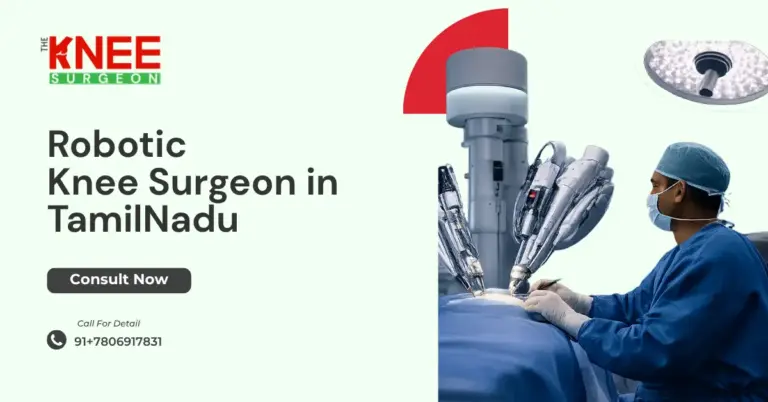
Robotic assisted knee replacement is often misunderstood as a machine performing surgery on its own. That is not how it works. The surgeon plans the operation, makes every clinical decision, and carries out the procedure. The robotic system acts as a highly accurate guide that helps translate that plan into the operating room with a level of consistency that is hard to achieve by hand alone.
Before surgery, imaging is used to build a three dimensional model of the patient’s own knee. That model informs implant size, angle and position specific to that person’s anatomy rather than a generic template. This planning stage, more than the robotic arm itself, is usually what makes the biggest difference to the final outcome.
Why Patients From Across Tamil Nadu Travel to Chennai for This Surgery
Robotic knee systems require significant investment in equipment, imaging software and surgeon training, so they remain concentrated in a small number of centres, most of them in Chennai. Patients from Madurai, Coimbatore, Salem, Trichy, Tirunelveli and neighbouring districts often travel to the city specifically because their local hospital does not yet offer robotic assisted joint replacement, or because they want a surgeon with a high volume of robotic cases rather than someone who performs it occasionally.
If you are planning to travel for this surgery, a few practical points matter:
- Single trip evaluation. Most of the diagnostic work, X-rays, blood tests and physical assessment, can be completed within one visit so a second trip is not needed just for evaluation.
- Teleconsultation for follow up. Many post operative reviews can be handled over video call once the surgical wound has healed well, which reduces the number of trips an outstation patient needs to make.
- Local physiotherapy coordination. Your surgeon’s team can often coordinate a rehabilitation plan with a physiotherapist near your hometown once the initial recovery weeks in Chennai are complete.
- Stay duration. Most patients plan for a hospital stay of about three to five days, followed by roughly one to two weeks near the hospital before travelling home, depending on how recovery progresses.
Ask your surgeon directly how outstation care is handled at their hospital. A dependable robotic knee surgeon in Tamil Nadu should have a clear answer to this rather than treating it as an afterthought.
Robotic vs Traditional Knee Replacement
Traditional knee replacement has served patients well for decades and remains a sound option for many. The real difference with robotic surgery lies in precision and personalisation. Traditional technique relies on standard alignment guides and the surgeon’s manual skill. Robotic technique adds computer assisted accuracy on top of that same skill, which can support better implant alignment, more balanced soft tissue tension, and in many cases a smoother early recovery.
Neither approach guarantees a perfect result, and the surgeon’s experience still matters more than the equipment. For patients with complex deformities, or those who simply want the most precise alignment achievable, robotic surgery has become an increasingly preferred choice across Tamil Nadu.
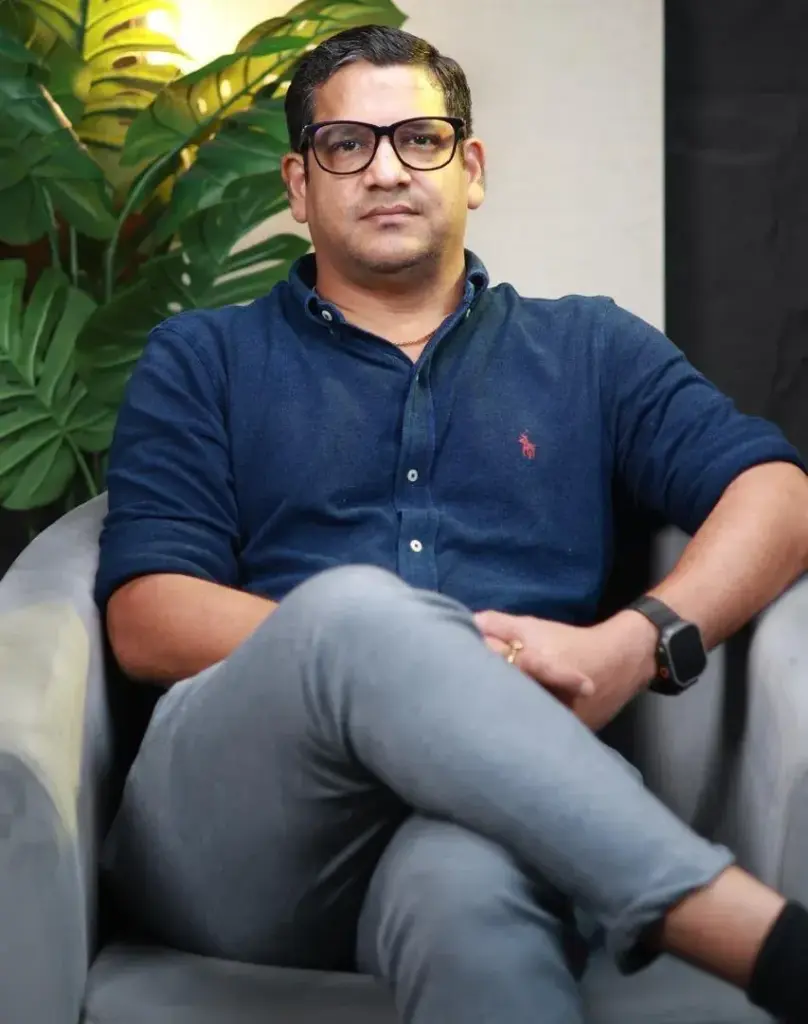
Meet Dr. Vijay Kumar Sohanlal, Robotic Knee Surgeon in Tamil Nadu
Choosing the right surgeon matters more than choosing the technology. Dr. Vijay Kumar Sohanlal has built his practice around robotic assisted and navigation guided joint replacement, treating patients from Chennai and from across Tamil Nadu who are looking for a dependable robotic knee replacement surgeon.
His consultations tend to start with listening rather than diagnosing. Before any surgical plan is drawn up, he spends time understanding a patient’s daily routine, pain pattern, and what recovery actually needs to look like for their own life, whether that means walking to temple every morning, managing a farm, or simply climbing stairs without wincing.
Qualifications and medical credentials
| Qualification | Institution |
| MBBS | Mysore University |
| MS Orthopaedics | Sri Ramachandra Medical College, Chennai |
| Fellowship in Joint Replacement Surgery | Breach Candy and Lilavati Hospital, Mumbai |
| Advanced Joint Arthroplasty Fellowship | St. Josef Bruderkrankenhaus Hospital, Germany |
| Fellowship in Joint Replacement and Arthroscopy | Sportsmed Hospital, Australia |
Experience: Over 18+ years in orthopaedic and joint replacement surgery, with thousands of patients treated for knee arthritis, joint deformity and long standing knee pain that no longer responded to medication or physiotherapy.
Specialisation includes:
- Robotic knee replacement surgery
- Total knee replacement
- Bilateral knee replacement
- Revision knee replacement
- Navigation assisted surgery
- Minimally invasive joint replacement
Who Needs Robotic Knee Replacement Surgery?
Not everyone with knee pain needs surgery, and a good surgeon will say so plainly rather than rushing toward an operating date. Robotic knee replacement is typically considered once joint damage has progressed to a point where non surgical options no longer provide meaningful relief.
Common signs of advanced knee arthritis:
- Persistent pain that limits walking or standing
- Stiffness that makes it hard to fully bend or straighten the knee
- Swelling that does not settle with rest
- A grinding or clicking sensation during movement
- Visible deformity, such as bowing inward or outward
- Pain at night that disrupts sleep

Physiotherapy, weight management, anti-inflammatory medication and injections are usually tried first, and for many patients they work well for years. Surgery becomes a reasonable option once these measures stop making a real difference to daily comfort and mobility.
How Robotic Knee Replacement Works, Step by Step
Initial consultation. A detailed conversation, physical examination, and imaging such as X-rays or MRI to assess how far the joint damage has progressed. This is also where the surgeon confirms whether robotic assisted surgery genuinely suits the case, rather than assuming it is the default for everyone.
Three dimensional surgical planning. Once surgery is confirmed, imaging builds a personalized model of the knee that guides implant size, position and alignment before the patient ever enters the operating theatre.
Surgery day. The robotic system assists with bone preparation within the boundaries set during planning, while the surgeon actively guides every step. Damaged cartilage and bone are removed with precision, and the implant is positioned according to the pre-built plan, with real time checks on alignment and balance before closing.
Benefits and Honest Limitations
What robotic assistance tends to offer:
- More precise implant alignment based on the patient’s own anatomy
- Better preservation of healthy bone and surrounding tissue
- Potentially reduced blood loss during surgery
- Often a smoother, faster return to daily activities
- Improved joint balance, which can support long term implant performance
What is worth knowing honestly:
Robotic surgery generally costs more than traditional replacement because of the technology and additional planning involved. The surgeon’s hands-on experience with the system still matters more than the machine itself. It is also not the ideal fit for every anatomy, particularly knees with severe prior deformity or existing surgical hardware. Long term data on robotic implants continues to grow, though it has not yet accumulated across the same decades of history as traditional implants. A trustworthy robotic knee surgeon in Tamil Nadu will walk you through these trade offs honestly rather than only listing the advantages.
Recovery Timeline After Robotic Knee Replacement
First week: Most patients sit up and begin gentle movement within a day of surgery, with assisted walking often starting soon after. Pain is managed carefully during this period, and early mobilisation plays a real role in reducing stiffness later.
Weeks two to six: Physiotherapy typically begins within the first few days and continues for weeks afterward, rebuilding strength, restoring range of motion, and retraining the muscles around the new joint.
Months two to twelve: Walking with support usually improves within days, climbing stairs becomes manageable within a few weeks, and most patients return to routine daily activities within roughly four to eight weeks. Full strength and confidence in the joint generally continue improving over the following months, though timelines vary based on age, overall health, and how consistently physiotherapy is followed.
Cost of Robotic Knee Replacement in Tamil Nadu
The overall cost depends on the type and brand of implant used, the hospital’s infrastructure, the complexity of the individual case, length of hospital stay, and the rehabilitation plan that follows. Patients are usually given a clear cost breakdown during the initial consultation once imaging and evaluation are complete.
Robotic assisted surgery generally costs somewhat more than traditional knee replacement, mainly due to the technology, planning software and additional pre operative imaging involved. Many patients still choose it for the potential benefits in alignment accuracy and recovery speed, but it is a decision worth discussing openly with your surgeon rather than assuming robotic is automatically the better option for your specific case. A transparent robotic knee doctor in Tamil Nadu will lay out both the cost difference and the expected benefit before you decide.
Why Patients Across Tamil Nadu Choose Dr. Vijay Kumar Sohanlal
What tends to stand out to patients is not the technology itself but how much time is spent explaining it. Dr. Vijay Kumar Sohanlal is known for walking patients through their diagnosis, their options and realistic expectations before ever discussing surgery dates, which matters when someone is nervous about a major procedure and has travelled from another city to be there.
At MAHI Multispecialty Hospital in Kilpauk, Chennai, robotic assisted navigation systems, digital imaging and structured rehabilitation support are brought together to give patients a coordinated treatment experience from diagnosis through recovery, rather than a fragmented one across multiple facilities.
Book a Consultation
If knee pain has started shaping the way you move through your day, whether you live in Chennai or are considering travelling from elsewhere in Tamil Nadu, it may be time for an honest conversation about your options. Dr. Vijay Kumar Sohanlal offers detailed consultations to help you understand whether robotic knee replacement is right for you, what to expect from surgery, and how a personalised recovery plan can get you back to daily life without constant knee pain holding you back. Book a consultation at MAHI Multispecialty Hospital, Kilpauk, Chennai, or reach out directly to discuss your symptoms and treatment options.
Conclusion
Robotic assisted knee replacement has changed what patients across Tamil Nadu can expect from this surgery, offering greater precision, improved implant alignment, and a more predictable recovery than many patients assume going in. Choosing an experienced specialist matters more than choosing the technology itself. With over 18+ years of experience, international training in Germany and Australia, and a practice built specifically around robotic assisted joint replacement, Dr. Vijay Kumar Sohanlal has helped thousands of patients from Chennai and across the state regain mobility and return to daily life without constant knee pain.
Read More: Frozen Shoulder Treatment.