Medically reviewed by: Dr. Vijay Kumar Sohanlal, MBBS, MS (Orthopaedics), Orthopaedic and Joint Replacement Surgeon, Founder and Owner, MAHI Multispecialty Hospital, Kilpauk, Chennai
Last medically reviewed: September 2026
If your knee has been aching for months and you have finally decided it is time to see someone, the last thing you want is to scroll through a directory of forty unfamiliar names sorted by consultation fee. You want a straight answer. Is there a knee replacement surgeon in Kilpauk who actually knows what they are doing, and can get in to see them without a hassle.
This page is meant to answer exactly that. Not a list, not a sales pitch, just what knee replacement surgery actually involves, when it genuinely makes sense, and what to expect from a proper consultation in Kilpauk.
Why Knee Pain Reaches This Point
Knee pain rarely appears suddenly. It usually creeps in over years, a bit of stiffness after sitting too long, a twinge on the stairs, and eventually a limp that has quietly become normal. By the time most people book a consultation, the knee has already been managing on its own for a while.
A few things tend to be behind it:
- Age related wear. The cartilage that cushions the knee thins out gradually, and movements like climbing stairs or standing up from a low chair start to feel stiff rather than smooth. This is the most common reason patients in their fifties and sixties end up consulting.
- Old injuries catching up. A fall, a sports injury, or ligament damage from years ago can resurface as arthritis later in life, even if it healed reasonably well at the time.
- Inflammatory conditions. Rheumatoid arthritis and similar conditions cause ongoing inflammation that can flare without much warning, often affecting both knees.
- Weight and alignment. Flat feet, muscle weakness around the joint, or simply carrying extra weight over years puts steady strain on the knee that adds up.
None of this automatically means surgery. Most patients start with physiotherapy, weight management, and medication, and for a good number of people, that is enough for years.
When Knee Replacement Actually Becomes Worth Discussing
Surgery is usually the right conversation to have once these signs are present and non surgical treatment has stopped helping:
- Pain that limits ordinary things like walking, standing, or getting up from a chair
- Stiffness that makes it hard to fully bend or straighten the knee
- Swelling that does not settle with rest
- A grinding or clicking sensation during movement
- Visible bowing or deformity in the joint
- Pain at night that interrupts sleep
If two or three of these sound familiar and physiotherapy or medication has not made a real difference, it is worth getting a proper evaluation rather than continuing to manage it on your own.
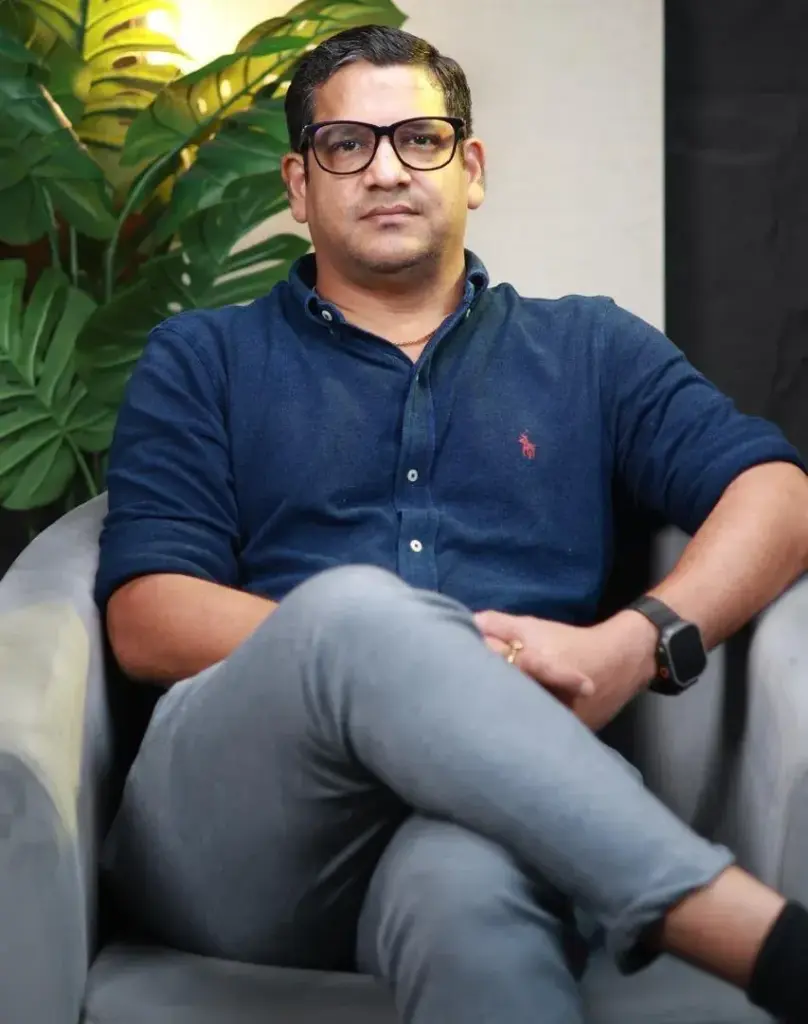
Dr. Vijay Kumar Sohanlal, Knee Replacement Surgeon in Kilpauk
Dr. Vijay Kumar Sohanlal has practised orthopaedics for over 18+ years, with a focus on hip and knee joint replacement, including robotic assisted and minimally invasive techniques. He holds an MBBS from Mysore University and an MS in Orthopaedics from Sri Ramachandra Medical College, Chennai, followed by fellowship training in joint replacement surgery at Breach Candy and Lilavati Hospital, Mumbai, advanced joint arthroplasty training at St. Josef Bruderkrankenhaus Hospital in Germany, and further fellowship training in joint replacement and arthroscopy at Sportsmed Hospital in Australia.
He founded and currently leads MAHI Multispecialty Hospital on Millers Road in Kilpauk, and also practises as Senior Joint Replacement Surgeon at MGM Healthcare in Aminjikarai. Earlier in his career, he served as Clinical Lead for Robotic Joint Replacement at Medway Group of Hospitals.
Qualifications and fellowship training
| Qualification | Institution |
| MBBS | Mysore University |
| MS Orthopaedics | Sri Ramachandra Medical College, Chennai |
| Fellowship in Joint Replacement Surgery | Breach Candy and Lilavati Hospital, Mumbai |
| Advanced Joint Arthroplasty Fellowship | St. Josef Bruderkrankenhaus Hospital, Germany |
| Fellowship in Joint Replacement and Arthroscopy | Sportsmed Hospital, Australia |
Experience: Over 18+ years in orthopaedic and joint replacement surgery, with thousands of knee and hip procedures performed across his career.
Where he practises:
- Founder and Owner, MAHI Multispecialty Hospital, Millers Road, Kilpauk, Chennai
- Senior Joint Replacement Surgeon, MGM Healthcare, Aminjikarai
What the Knee Replacement Process Actually Involves
- Initial evaluation. A physical examination and imaging such as X-rays or an MRI to see how far the joint damage has progressed, along with an honest conversation about whether surgery is genuinely needed yet or whether other treatment still has room to work.
- Pre-surgical planning. If surgery is the right path, your overall health is reviewed, medications are checked, and a personalised surgical plan is put together. For robotic assisted cases, imaging is used to build a three dimensional model of the knee that guides implant size and positioning ahead of time.
- Surgery. Damaged cartilage and bone are removed and replaced with an artificial implant. Robotic assistance, when used, helps the surgeon carry out the planned bone cuts with more consistency than manual instruments allow, though the surgeon remains in control throughout.
- Recovery. Physiotherapy typically starts within the first few days after surgery and continues for weeks afterward. Most patients begin walking with support within a day or two, and return to routine daily activities within roughly four to eight weeks, with continued improvement in strength over the following months.
Robotic or Conventional, Which One Do You Actually Need
This is one of the first questions most patients ask, and it deserves an honest answer rather than a sales pitch toward the more expensive option.
Conventional knee replacement, done well, delivers strong results for a straightforward knee with reasonably normal alignment. Robotic assisted surgery adds computer guided precision on top of the surgeon’s skill, and tends to matter most for knees with significant deformity, prior injury, or unusual anatomy, where manual judgement alone has less margin for error. A trustworthy surgeon will tell you honestly which category your knee falls into rather than defaulting to robotic assistance for everyone regardless of need.
Why Seeing a Surgeon in Kilpauk Specifically Matters
Knee replacement is not a single visit event. There is a pre surgery evaluation, the procedure itself, and then weeks of physiotherapy follow ups afterward. For patients in their sixties and seventies, or for anyone without easy access to transport across the city, being able to reach the clinic without a long drive genuinely affects whether physiotherapy gets followed through consistently, or quietly stops after the second visit because getting there became too much trouble.
Kilpauk sits close to Purasawalkam, Aminjikarai, and Egmore, which is part of why patients from those areas often choose to consult here rather than travel further into the city for ongoing joint care.
Conclusion
Choosing a knee replacement surgeon in Kilpauk comes down to two things that matter more than any technology on offer, whether the surgeon gives you an honest assessment of your specific knee, and whether ongoing care is realistically manageable once surgery is behind you. Dr. Vijay Kumar Sohanlal sees patients for exactly this at MAHI Multispecialty Hospital in Kilpauk .whether that means a first opinion on a knee that has been bothering you for years or a clear plan for surgery and recovery.
Read More: Knee Pain in Winter.