
Medically reviewed by: Dr. Vijay Kumar Sohanlal, MBBS, MS (Orthopaedics), Orthopaedic and Joint Replacement Surgeon, Founder, MAHI Multispecialty Hospital, Kilpauk, Chennai
Last medically reviewed: November 2026
Knee pain, stiffness and difficulty walking can affect everyday activities and make routine movements uncomfortable. When these symptoms continue despite appropriate treatment, patients may explore different options, including robotic-assisted knee replacement.
People from Chennai, Coimbatore, Madurai, Salem, Tiruchirappalli and other parts of Tamil Nadu may wish to understand how robotic-assisted knee replacement works, who may be suitable for the procedure and what to expect during recovery.
Dr. Vijay Kumar Sohanlal is an orthopaedic and joint replacement surgeon associated with MAHI Hospitals in Chennai. Patients considering knee replacement can discuss their symptoms, investigation reports and treatment options during an orthopaedic consultation. The choice between non-surgical treatment, conventional knee replacement and robotic-assisted surgery depends on individual clinical findings.
What is Robotic-Assisted Knee Replacement?
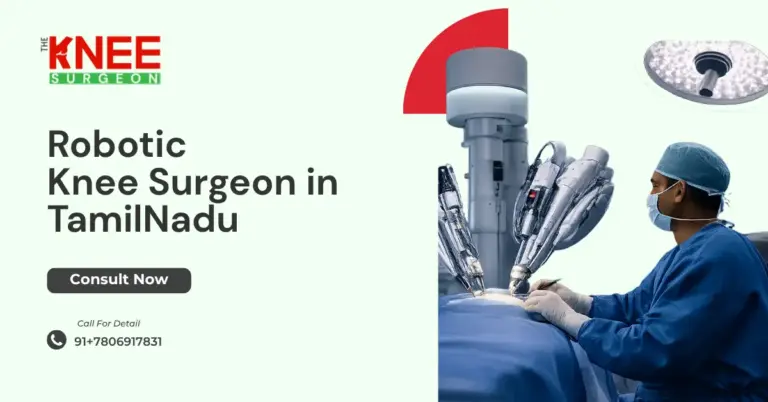
Robotic-assisted knee replacement is a procedure in which the surgeon uses a robotic system to support surgical planning and the preparation or positioning of the joint replacement components, depending on the system used.
The technology does not operate independently or make treatment decisions. The surgeon evaluates the knee, plans the procedure, interprets the information provided by the system, and performs the operation.
The specific planning method varies by robotic platform. Some systems use preoperative imaging to create a three-dimensional model of the knee, while others use information collected during surgery. The robotic knee replacement surgeon in chennai uses the available information to assess the patient’s anatomy and guide the procedure.
Robotic assistance is intended to support the surgical process. It does not remove the risks associated with knee replacement, and it cannot guarantee a particular result.
About Dr. Vijay Kumar Sohanlal-Robotic Knee Surgeon in Tamil Nadu
Dr. Vijay Kumar Sohanlal is an orthopaedic and joint replacement surgeon based in Chennai. His published professional profile lists qualifications in medicine and orthopaedics, along with additional training in joint replacement and arthroplasty.
His listed qualifications include an MBBS from Mysore University and an MS in Orthopaedics from Sri Ramachandra Medical College, Chennai. His profile also lists fellowship training in joint replacement surgery at Breach Candy and Lilavati Hospital in Mumbai, advanced joint arthroplasty training at St. Josef Bruderkrankenhaus Hospital in Germany, and further training in joint replacement and arthroscopy at Sportsmed Hospital in Australia.

His professional background includes work in orthopaedics and joint replacement, including a previous clinical leadership role in robotic joint replacement at Medway Group of Hospitals and a senior joint replacement role at MGM Healthcare.
Dr. Vijay Kumar Sohanlal is associated with MAHI Multispecialty Hospital in Chennai. His published professional information includes robotic-assisted and conventional joint replacement among his areas of practice.
Patients considering knee replacement can discuss their symptoms, examination findings, imaging reports, treatment alternatives, and the suitability of robotic assistance during a clinical consultation.
Book an appointment to discuss your knee concerns and understand the next steps in your care.
How Does Robotic Knee Replacement Work?
The process usually involves several stages. The exact steps depend on the patient’s condition, the implant selected, and the robotic system available.
1. Clinical assessment
The surgeon reviews the patient’s symptoms, medical history, mobility, previous treatments, and general health. A physical examination helps assess knee movement, stability, alignment, and functional limitations.
X-rays and other investigations may be requested to understand the extent of joint damage and determine whether replacement surgery is appropriate.
2. Surgical planning
When surgery is considered suitable, the surgeon plans the procedure according to the patient’s anatomy and the intended implant. Depending on the system, planning may use preoperative imaging, measurements collected during surgery, or a combination of these methods.
3. Robotic guidance during surgery
During the operation, the robotic system assists with specific tasks, such as bone preparation or assessment of alignment. The surgeon remains responsible for making clinical decisions and carrying out the procedure.
4. Implant placement and assessment
The damaged joint surfaces are prepared, and the replacement components are positioned according to the surgical plan and the findings during the operation. The surgeon checks the knee’s movement, alignment, and stability before completing the procedure.
5. Rehabilitation
After surgery, the patient follows an individual rehabilitation plan. This commonly includes supported walking, prescribed exercises, pain management, and follow-up assessments.
The pace of recovery differs between patients and depends on factors such as general health, pre-existing conditions, the complexity of surgery, and participation in rehabilitation.
Who May Need Robotic-Assisted Knee Replacement?
Robotic-assisted knee replacement may be considered for selected patients with substantial knee joint damage. The decision is based on the clinical condition rather than the availability of technology alone.
Conditions that may lead to consideration of knee replacement include:
- Knee osteoarthritis: Progressive cartilage damage that can cause pain, stiffness, and difficulty with movement.
- Rheumatoid arthritis: Inflammation that may damage the knee joint in some patients.
- Post-traumatic arthritis: Joint damage that develops following an earlier injury or fracture.
- Significant knee deformity: Changes in alignment associated with joint damage that may affect standing and walking.
- Persistent functional limitations: Difficulty with daily activities when symptoms remain substantial despite appropriate non-surgical care.
Symptoms that deserve assessment include persistent pain during walking, stiffness after sitting, swelling, reduced knee movement, difficulty climbing stairs, and pain that interferes with sleep.
These symptoms do not automatically mean that surgery is necessary. A doctor should evaluate the underlying cause and discuss suitable treatment options.
Are You a Suitable Candidate for Robotic Knee Replacement?
Not everyone with knee pain requires knee replacement, and not everyone who needs replacement surgery requires robotic assistance.
The decision may depend on:
- The extent and location of joint damage.
- The severity and duration of symptoms.
- The effect of pain on walking and daily activities.
- The response to medication, physiotherapy, and other appropriate measures.
- General health and any conditions that may affect surgery or recovery.
- The type of replacement required and the availability of a suitable robotic system.
- The patient’s preferences after discussing benefits, risks, costs, and alternatives.
A consultation helps determine whether continued non-surgical treatment, conventional knee replacement, or robotic-assisted surgery is appropriate.
Robotic Knee Replacement vs Conventional Knee Replacement
Both robotic-assisted and conventional knee replacement aim to replace damaged joint surfaces and improve joint function. The main difference is how certain stages of planning and surgery are supported.
Robotic-assisted surgery
Depending on the system, robotic assistance can provide detailed planning, intraoperative measurements, and guidance during selected surgical steps. These features may help the surgeon assess alignment and implant positioning.
Conventional surgery
Conventional knee replacement uses established surgical techniques and instruments to prepare the joint and position the replacement components. It remains an appropriate option for many patients.
Which approach is more suitable?
There is no single approach that is best for every patient. Robotic assistance may offer technical advantages in planning and execution, but the clinical importance of those advantages varies by patient, system, surgeon, and outcome being measured.
Patients should ask the surgeon why a particular approach is recommended, what evidence supports its use for their condition, and whether conventional surgery would also be reasonable.

The decision should be based on clinical suitability rather than the assumption that newer technology always produces a better outcome.
Benefits and Limitations of Robotic-Assisted Knee Replacement
Understanding both the potential benefits and limitations helps patients make informed decisions.
Potential benefits
Depending on the system and the individual case, robotic assistance may help with:
- Personalised preoperative or intraoperative planning.
- Assessment of knee alignment and joint balance.
- Guidance during selected stages of bone preparation.
- Consistent execution of the planned surgical steps.
- Evaluation of implant positioning during the procedure.
These are technical advantages. They should not be interpreted as a guarantee of less pain, faster recovery, longer implant survival, or fewer complications for every patient.
Limitations and risks
Robotic-assisted knee replacement has limitations that should be discussed before surgery.
- The technology does not eliminate the possibility of infection, blood clots, stiffness, persistent pain, implant problems, or other surgical complications.
- The procedure may involve additional technology-related costs.
- Suitability depends on the patient’s anatomy, clinical condition, and the system available.
- The quality of assessment, surgical judgement, rehabilitation, and follow-up remains important.
- Long-term results depend on multiple factors, including implant characteristics, surgical factors, and patient health.
The surgeon should explain the expected benefits and risks in the context of the individual patient’s condition.
Choosing a Robotic Knee Surgeon in Tamil Nadu
Patients comparing treatment options should look beyond the equipment used. It is useful to understand the surgeon’s qualifications, experience with the proposed procedure, the hospital’s facilities, and the arrangements for postoperative care.
Before deciding, consider asking:
- Is knee replacement appropriate for my condition?
- Why is robotic assistance being recommended in my case?
- What are the alternatives, including conventional surgery?
- What complications should I understand before proceeding?
- Which implant is proposed, and why?
- What rehabilitation and follow-up will I need?
- How will my treatment be coordinated if I live outside Chennai?
A clear explanation of these points helps patients understand their choices and participate in decisions about their care.
Robotic Knee Replacement Consultation for Patients Across Tamil Nadu
Patients living outside Chennai may have questions about travelling for a knee replacement consultation. Before making arrangements, it is helpful to understand the consultation process, required investigations, hospital admission and rehabilitation schedule.
Patients from Coimbatore, Madurai, Salem, Erode, Tirunelveli and other districts can enquire about appointment availability and the records needed for an initial assessment.
Previous knee X-rays, MRI reports if available, medical history and details of earlier treatments may help the doctor understand the condition. Additional investigations may be recommended after the consultation.
For patients considering surgery, the hospital stay, post-operative physiotherapy and follow-up schedule should be discussed in advance. The treatment plan should be based on the patient’s medical condition rather than travel distance or location.
What Determines the Cost of Robotic Knee Replacement?
The cost of knee replacement varies between hospitals and patients. Robotic-assisted surgery may involve additional technology-related expenses, but the total amount depends on more than the surgical method alone.
Factors that may influence the cost include:
- The type of knee replacement required.
- The implant and materials selected.
- Hospital facilities and operating theatre charges.
- Preoperative investigations and medical assessment.
- The complexity of the operation and length of hospital stay.
- Medication, rehabilitation, and follow-up requirements.
- Any additional treatment needed because of the patient’s medical condition.
Patients should request an itemised estimate and clarify what is included, what may be charged separately, and how unexpected complications would affect the total cost. The suitability of a procedure should be assessed clinically rather than on price alone.
Hospital and Rehabilitation Arrangements in Chennai
For patients travelling from different parts of Tamil Nadu for robotic-assisted knee replacement, understanding the hospital arrangements and recovery process is an important part of treatment planning. Before deciding on surgery, patients and their family members may want to know where the consultation will take place, what investigations are required, how long hospital admission may be needed and what support is available after discharge.
Dr. Vijay Kumar Sohanlal is associated with MAHI Hospitals in Chennai, where patients can enquire about orthopaedic consultations and joint replacement treatment options.
Conclusion
Robotic-assisted knee replacement is one option for selected patients whose knee joint damage causes persistent pain and functional limitations. It combines the surgeon’s clinical judgement with technology that supports planning and selected surgical steps, but it does not remove surgical risks or guarantee a particular result.
If you are researching a robotic knee surgeon in Tamil Nadu, focus on the diagnosis, the surgeon’s verified qualifications, the reasons for recommending a particular technique, and the arrangements for rehabilitation and follow-up. A detailed discussion of benefits, limitations, risks, and alternatives can help you make an informed decision about your treatment.