Medically Reviewed by: Dr. Vijay Kumar Sohanlal, MBBS, MS (Orthopaedics), Orthopaedic & Joint Replacement Surgeon, Founder & Owner, MAHI Multispeciality Hospitals, Kilpauk, Chennai.
Last medically reviewed: October 2026
Knee pain can make everyday activities such as walking, climbing stairs, getting up from a chair, or exercising more challenging. In some cases, exercises for knee pain may help strengthen the muscles that support the knee, improve flexibility, and make daily movements easier.
However, knee pain can have many different causes, including arthritis, previous injuries, ligament problems, muscle weakness, and other conditions. Because of this, there is no single exercise routine that works for everyone. The most appropriate exercises should be based on the underlying cause, your mobility level, and your overall health.
Can Exercise Help Knee Pain?
For many people, appropriate exercise can be an important part of managing knee pain. Strengthening the muscles around the knee and improving flexibility can provide better support during everyday activities.
Low impact activities such as walking, cycling, swimming, and water based exercise may be easier to tolerate than high impact activities for some people. For knee arthritis, regular physical activity is commonly recommended to help maintain movement and strengthen the muscles supporting the joint.
If exercise increases your pain significantly, the activity may need to be modified or stopped. A physiotherapist or doctor can help you identify exercises that are appropriate for your condition.
Gentle Exercises for Knee Pain
The following exercises are commonly used to improve strength and movement around the knee. They should be performed slowly and within a comfortable range.
1. Straight Leg Raise
Lie on your back with one knee bent and the other leg straight. Tighten the thigh muscle of the straight leg and slowly raise it a short distance from the surface. Hold briefly and lower it with control.
This exercise focuses on the quadriceps, which help support the knee during movement.
2. Quad Sets
Sit or lie with your leg extended. Gently tighten the muscle at the front of your thigh while pressing the back of your knee toward the supporting surface. Hold the contraction for a few seconds and then relax.
Quad sets can be useful when bending the knee is uncomfortable because the exercise can be performed without repeated knee movement.
3. Seated Knee Extension
Sit comfortably on a chair with your feet on the floor. Slowly straighten one knee until your leg is extended as far as comfortable. Pause briefly and slowly lower your foot. This movement helps maintain knee mobility while working the thigh muscles.
4. Hamstring Curls
Stand behind a sturdy chair and hold it for balance. Slowly bend one knee, bringing your heel toward the back of your leg. Return to the starting position in a controlled manner.
This exercise works the hamstrings, which contribute to movement and support around the knee.
5. Calf Raises
Stand near a wall or sturdy surface for support. Slowly raise your heels so you are standing on your toes, then lower them back down.
Calf raises strengthen the lower leg and can support balance during standing and walking.
6. Side Leg Raises
Lie on your side with your legs straight. Keep your upper leg straight and slowly lift it upward without rotating your body. Lower it gradually.
This exercise works the muscles around the hip, which help provide stability during walking and other movements.
7. Gentle Half Squats
Stand with your feet about shoulder width apart and use a chair or wall for support if needed. Bend your knees slightly while keeping your movement controlled, then return to standing.
Do not force yourself into a deep squat. If squatting causes knee pain, choose another exercise and discuss it with a physiotherapist or doctor.
The American Academy of Orthopaedic Surgeons includes controlled half squats among exercises used in knee conditioning programs, with attention to technique and gradual progression.
Stretching Exercises for Knee Flexibility
Tight muscles around the thigh and lower leg can affect movement. Gentle stretching may help maintain flexibility when performed comfortably.
Hamstring Stretch
Sit on the edge of a chair and extend one leg forward. Keeping your back comfortable, gently lean forward until you feel a mild stretch behind the thigh. Do not bounce or force the movement.
Calf Stretch
Stand facing a wall with one foot behind the other. Keep the back heel on the floor and gently lean toward the wall until you feel a stretch in the calf.
Stretching should feel gentle rather than painful. If a particular stretch increases your knee symptoms, stop and seek professional advice.
Low Impact Activities for Knee Pain
If strengthening exercises are difficult initially, low impact activities may be easier to introduce.
Depending on your condition, options may include:
- Walking at a comfortable pace
- Stationary cycling
- Swimming
- Water based exercise
- Gentle mobility exercises
The most suitable activity depends on the cause and severity of your knee pain. For some conditions, even walking may need to be temporarily reduced if it causes significant pain or changes the way you walk.
How Often Should You Exercise?
There is no single schedule that works for everyone with knee pain. Your exercise frequency should depend on the type of exercise, your fitness level, your symptoms, and any underlying condition.
Start gradually rather than trying to complete a demanding routine on the first day. Focus on controlled movements and good technique. As the exercises become easier, a healthcare professional can guide you on increasing repetitions or resistance.
The goal is consistent movement that your knee can tolerate, not exercising through significant pain.
What If Exercise Causes Knee Pain?
A mild stretching sensation or muscle fatigue can occur during exercise. However, sharp pain, increasing swelling, significant instability, or worsening symptoms should not be ignored.
If an exercise repeatedly makes your symptoms worse, stop that movement and discuss it with a doctor or physiotherapist. The exercise may need to be changed, or the underlying cause of the pain may need further assessment.
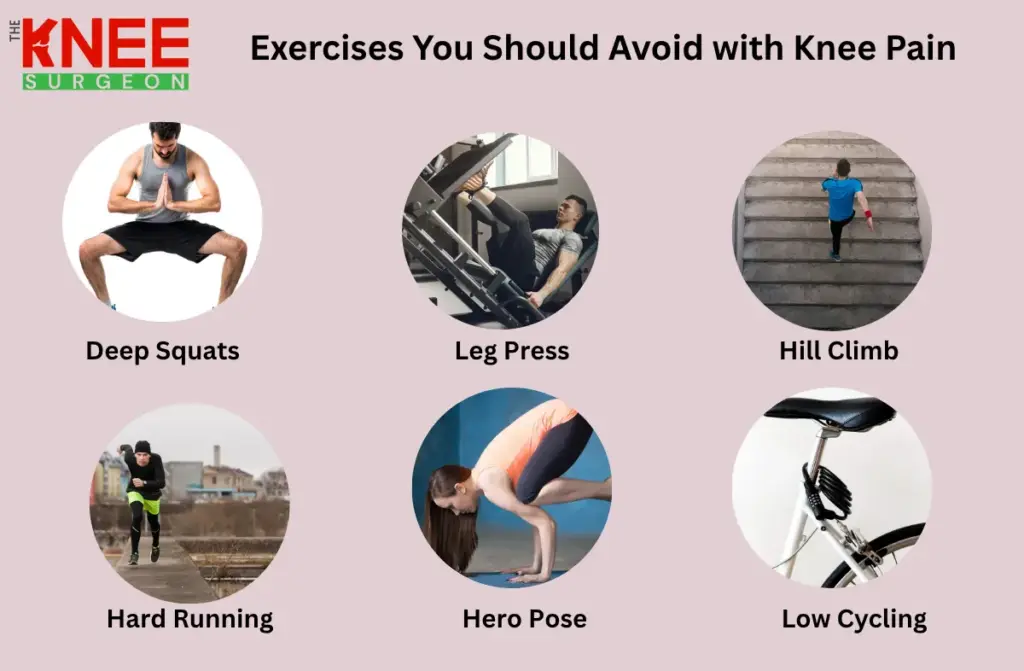
Exercises to Be Careful With
When you have unexplained or persistent knee pain, be cautious with activities that involve heavy loads, repeated jumping, sudden twisting, deep bending, or rapid changes in direction.
This does not mean these activities are permanently unsuitable for everyone. The appropriate level of activity depends on the diagnosis, physical condition, and stage of recovery.
A physiotherapist can help you progress from simpler movements to more demanding exercises when appropriate.
When Should You See a Doctor?
Exercise may help some types of knee pain, but it should not replace a medical assessment when symptoms are persistent or concerning.
Consider consulting a doctor if you have:
- Persistent or worsening knee pain
- Significant swelling
- Difficulty putting weight on the leg
- Repeated episodes of the knee giving way
- Locking or inability to fully move the knee
- Pain following a significant injury
- Symptoms that continue despite appropriate home care
Knee pain can have several different causes, so identifying the underlying problem is important before choosing a long term exercise programme.
Exercises for Knee Pain After an Injury or Surgery
Exercise selection can be different after a knee injury or surgery. The exercises used during rehabilitation are usually progressed in stages according to healing, strength, movement, and the type of procedure or injury.
Do not follow a general online exercise programme immediately after surgery or a significant injury unless your treating doctor or physiotherapist has advised that it is appropriate.
How Dr. Vijay Kumar Sohanlal Can Help
Dr. Vijay Kumar Sohanlal is an orthopaedic and joint replacement surgeon in Chennai with more than 18+ years of clinical experience.
For patients with ongoing knee pain, an orthopaedic assessment can help identify the possible cause and determine whether treatment should focus on exercise, physiotherapy, medication, injections, or another approach.
If knee pain continues despite appropriate exercises or starts interfering with walking and everyday activities, a consultation can help determine the next step.
Conclusion
Exercises for knee pain can help improve strength, flexibility, and movement when they are appropriate for the underlying condition. Start gradually, use controlled movements, and avoid pushing through significant pain.
If your knee pain is persistent, worsening, or associated with swelling, instability, locking, or an injury, seek professional assessment rather than relying only on home exercises. A personalized exercise plan can be safer and more useful than following the same routine for every type of knee pain.
Read More: Knee Replacement Surgeon in India