
Robotic Knee Surgeon in Chennai

Expert robotic knee surgeon in Chennai providing advanced knee replacement solutions for improved mobility, comfort, recovery, and long-term outcomes.
Robotic Knee Surgeon in Chennai
Contents

Knee pain that limits your daily life is not something you have to live with forever. Whether it’s the struggle to climb stairs, the stiffness that greets you every morning, or the ache that keeps you up at night — there is a solution. Robotic knee replacement surgery has transformed the way joint replacement is performed, and as a robotic knee surgeon in Chennai, Dr. Vijay Kumar Sohanlal brings that precision-driven care to patients right here in the city.

With over 18+ years of experience in joint replacement surgery and advanced international fellowship training from Germany and Australia, Dr. Vijay Kumar Sohanlal is among the most trusted robotic knee specialist in Chennai. He practices at MAHI Hospitals, Kilpauk, and MGM Healthcare, Chennai — offering world-class orthopaedic care with a personal touch.

Best Robotic Knee Surgeon in Chennai – Dr. Vijay Kumar Sohanlal

Dr. Vijay Kumar Sohanlal

Choosing the right surgeon is one of the most important decisions when considering robotic-assisted orthopedic surgery. Patients often look for experience, surgical precision, and a proven track record of successful outcomes. Dr. Vijay Kumar Sohanlal is widely regarded as one of the best robotic surgeon in Chennai, known for combining advanced technology with a compassionate, patient-centered approach to care.

With years of orthopedic expertise and thousands of successful procedures, he has helped patients overcome chronic joint pain and regain mobility. His dedication to precision, safety, and long-term results has earned him the reputation of being among the best robotic surgery doctors in Chennai.

Orthopaedic Doctor in Chennai
  • Approach: Patient-first treatment philosophy, with clear communication and guidance for both patients and families throughout the treatment journey.
  • Expertise: Specializes in robotic knee replacement, robotic hip replacement, and advanced joint reconstruction procedures.
  • Experience: Over 18+ years of orthopedic practice with extensive experience in minimally invasive and robotic-assisted surgeries.
  • Location: Recognized as a trusted robotic knee surgeon in Kilpauk, offering convenient access for patients across South Chennai and nearby regions.

    Patients who consult Dr. Vijay Kumar Sohanlal often appreciate his detailed consultations, where he carefully evaluates each case and explains the most suitable treatment options. By combining robotic technology with personalized care, he ensures patients feel confident and supported throughout their recovery journey. Reassured that they are in the hands of a surgeon who combines advanced technology with compassionate care. Feel reassured that they are in the hands of a surgeon who combines advanced technology with compassionate care.

    ⭐ Patient Ratings
    Google: 4.5 ★ | Justdial: 4.8 ★ | Practo: 4.7 ★

    What is Robotic Surgery?

    Robotic knee replacement is not about a robot performing surgery independently; instead, it is a sophisticated system that assists the surgeon in achieving exceptional accuracy during the procedure. The robotic platform creates a highly detailed map of the patient’s knee joint, allowing the surgeon to plan the surgery with remarkable precision.

    During the operation, the robotic system provides real-time feedback and guidance, ensuring that bone cuts and implant placement are carried out with optimal alignment. This level of precision significantly improves the overall success of the surgery.

    Robotic Knee Surgeon in Chennai

    For patients, robotic surgery provides several important benefits:

    • Smaller surgical incisions
    • Reduced blood loss during surgery
    • Better positioning of the knee implant
    • Faster recovery and shorter hospital stay
    • Improved joint function and long-term durability

    Because of these advantages, more patients are now seeking consultation with a robotic surgeon in Chennai for knee replacement procedures.

    Types of Surgeries Performed Using Robotic Surgery

    Robotic-assisted technology has transformed the way many complex surgeries are performed. By combining advanced imaging, computer guidance, and the surgeon’s expertise, robotic systems allow procedures to be completed with greater accuracy and minimal tissue damage.

    An experienced robotic surgeon in Chennai can perform a wide range of advanced orthopedic procedures using robotic technology.

    • Robotic Knee Replacement Surgery: This procedure allows highly precise implant placement, improving joint alignment and restoring natural knee movement. The best knee robotic surgeon in Chennai carefully customizes each surgery according to the patient’s unique anatomy.
    • Robotic Hip Replacement Surgery: Robotic assistance ensures optimal positioning of the hip implant, reducing muscle damage and improving post-surgery mobility.
    • Robotic Spine Surgery: Robotic technology enables surgeons to operate with exceptional accuracy in delicate spinal areas, minimizing risk and improving patient recovery.
    • Robotic Joint Replacement Surgery: Robotic systems are also used for shoulder and elbow replacements, restoring joint function with shorter rehabilitation periods.
    • Robotic-Assisted General Surgeries: Apart from orthopedics, robotic surgery is also widely used in urology, gynecology, and gastrointestinal procedures, delivering safer and more comfortable surgical outcomes.

    Who is an Ideal Candidate for Robotic Knee Replacement?

    Not every knee problem requires surgery, and not every surgery requires a robotic system. What makes robotic knee replacement special is the level of personalisation it brings to patient care. But first, it’s important to understand whether you are the right candidate for this procedure.

    Signs You May Need Robotic Knee Surgery

    Most patients who benefit from robotic knee replacement have been dealing with knee problems for a prolonged period. You may be a suitable candidate if you experience:

    • Persistent knee pain that has lasted for months or years, especially during walking, standing, or climbing stairs
    • Swelling and stiffness in the knee joint that doesn’t fully go away even after rest
    • A visible deformity of the knee — such as bow-leggedness or knock-knee — that has gradually worsened
    • A grinding or locking sensation in the joint during movement
    • Severe loss of mobility that is affecting your independence and quality of life
    • Night pain that disturbs your sleep consistently

    These signs alone don’t confirm that surgery is needed. A proper clinical evaluation by a robotic knee surgery doctor in Chennai like Dr. Vijay Kumar Sohanlal will help determine the right course of action based on your specific condition.

    When Non-Surgical Treatments Stop Working

    Surgery is typically considered only after conservative treatments have been tried and have not provided enough relief. These include physiotherapy, pain medications, steroid injections, PRP therapy, activity modification, and walking aids. When these measures no longer improve your daily function or your pain keeps returning despite treatment, your doctor may recommend robotic knee replacement as the next step.

    The goal is never to rush into surgery. But when non-surgical options are no longer enough, robotic technology ensures that when surgery does happen, it is done with the highest degree of precision and safety.

    Age and Health Factors to Consider

    Robotic knee replacement is most commonly performed in patients between 55 and 80 years of age, though it is not strictly age-limited. Younger patients with severe arthritis or joint damage can also benefit from this procedure, particularly because robotic precision helps position the implant in a way that extends its longevity.

    From a health standpoint, candidates should be medically stable — meaning conditions like diabetes, blood pressure, or heart-related issues should be reasonably well-controlled before surgery. His team conducts a thorough pre-surgical evaluation to ensure every patient is safe and well-prepared for the procedure.

    Robotic Knee Replacement vs Traditional Knee Replacement

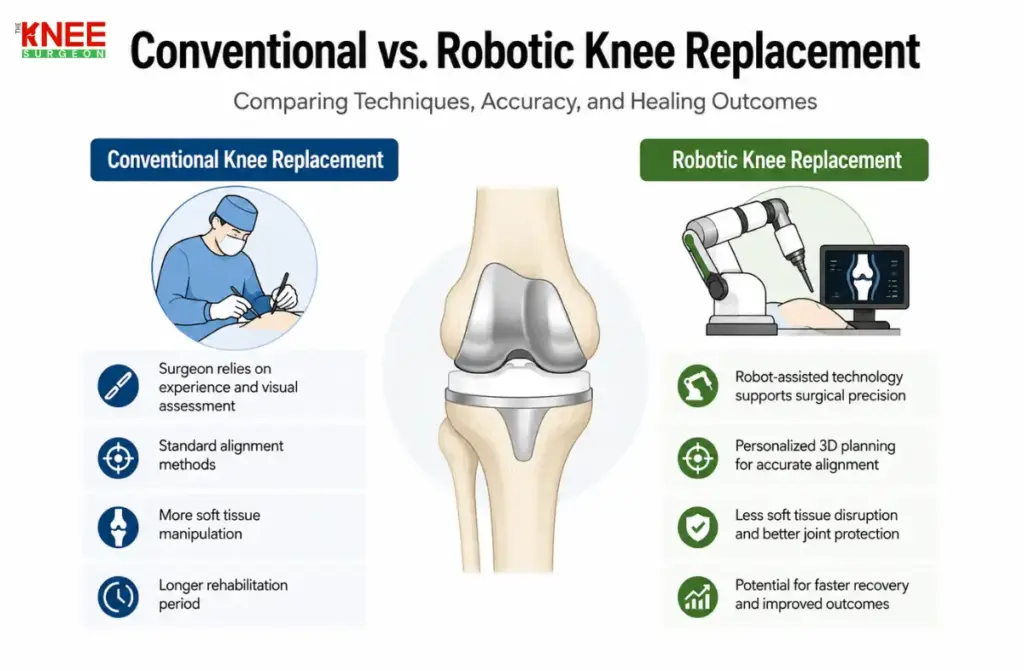
    Patients often ask whether robotic surgery is genuinely better than traditional knee replacement — or whether it’s just a marketing phrase. The difference is real, measurable, and clinically significant.

    Surgical Precision Comparison

    In traditional knee replacement, the surgeon uses manual instruments and relies on pre-operative X-rays and intraoperative judgement to position the implant. While experienced surgeons achieve good results, there is an inherent degree of variability.

    Robotic knee surgery uses a CT-based 3D model of your knee to plan the exact implant size and position before the procedure even begins. During surgery, the robotic arm assists the surgeon in executing those cuts within a sub-millimetre accuracy range. This is not about replacing the surgeon — it’s about giving an expert like Dr. Vijay Kumar Sohanlal, a robotic knee specialist in Chennai, an advanced tool that makes precision consistent and repeatable for every single patient.

    Recovery Time Comparison

    One of the most appreciated advantages of robotic knee replacement is the impact on recovery. Because the bone cuts are more accurate and soft tissue damage is minimised, patients tend to experience less post-surgical swelling and inflammation. Many patients are walking with assistance on the same day or the morning after surgery. Most patients return home within 3 to 4 days.

    Traditional knee replacement also has good outcomes, but robotic patients often report a noticeably faster early recovery — with less reliance on pain medication and earlier participation in physiotherapy exercises.

    Pain and Rehabilitation Differences

    Post-operative pain after robotic surgery tends to be more manageable because the surrounding muscles, tendons, and ligaments are preserved more carefully during the procedure. The robotic system creates a boundary — called a haptic boundary — that prevents the surgeon from accidentally cutting beyond the planned zone, which reduces collateral tissue disruption.

    This directly influences rehabilitation. Patients find it easier to engage with physiotherapy, bend and straighten the knee more comfortably, and return to daily activities sooner. The rehabilitation path is still the same, but the starting point is typically better.

    Long-Term Implant Performance

    The long-term success of a knee implant is closely tied to how well it is positioned. A correctly aligned implant distributes body weight evenly across the joint surface, which prevents uneven wear over time. Studies have shown that robotically placed implants have superior alignment accuracy compared to manual techniques, which translates to fewer revision surgeries and a longer functional life for the implant — often 20 years or more.

    What Happens Before Robotic Knee Surgery?

    Understanding the pre-surgical process helps patients feel more confident and prepared. Robotic knee replacement involves more detailed planning than traditional surgery, which is one of the reasons its outcomes are so consistent.

    Initial Consultation and Knee Assessment

    Your first appointment with Dr. Vijay Kumar Sohanlal involves a detailed clinical assessment. He will listen to your symptoms, review your medical history, examine your knee’s range of motion, assess joint stability, and understand how knee pain has affected your quality of life. This is not a rushed appointment — He is known for taking the time to explain everything clearly and answer every question.

    Based on this evaluation, he will determine whether you are a suitable candidate for robotic knee replacement and discuss all available options, including non-surgical alternatives if appropriate.

    Imaging and Surgical Planning

    Once surgery is confirmed as the best path forward, a CT scan of your knee is obtained. This scan forms the basis of a 3D virtual model of your joint, which the robotic system uses to plan the surgery in detail — including the precise bone cuts required and the ideal size and positioning of your implant.

    This pre-operative planning is what separates robotic surgery from conventional approaches. Every aspect of the procedure is thought through before you enter the operating room. Dr. Vijay Kumar Sohanlal reviews this plan carefully and personalises it to your unique anatomy.

    Preparing for Surgery Day

    In the days leading up to surgery, you will receive specific instructions from the team at MAHI Hospitals. These include fasting guidelines, medication adjustments, bathing protocols, and what to bring to the hospital. You will also meet the anaesthesia team and complete any remaining pre-operative tests.

    Practical preparation matters too — arrange for a family member or caregiver to support you post-discharge, prepare your home with grab bars or handrails in the bathroom, keep essential items at accessible heights, and clear pathways of any rugs or obstacles. These simple steps make the early days at home significantly safer and easier.

    What to Expect During Recovery After Robotic Knee Replacement?

    Recovery after robotic knee replacement is a gradual process, but it moves more smoothly than most patients expect. Knowing what to anticipate at each stage removes unnecessary anxiety and helps you stay on track.

    First 24 Hours After Surgery

    You will wake up in the recovery room with your knee bandaged and a drain in place to collect any fluid. Pain is managed with a combination of nerve blocks, medications, and anti-inflammatory agents. Most patients are sat up and encouraged to dangle their legs off the bed within a few hours of surgery. A physiotherapist will guide you through your first simple exercises — ankle pumps, quad sets, and gentle knee bends — the same day.

    Some patients take their first few steps with the help of a walker within 6 to 12 hours of surgery. While this might seem early, early mobilisation is a key part of modern recovery protocols and significantly reduces the risk of complications such as blood clots.

    Recovery During the First Month

    The first week at home is about managing comfort and building confidence. Swelling is normal and will gradually reduce. Ice packs, elevation of the leg, and regular physiotherapy exercises help speed up this process. Most patients are walking short distances at home with a walker by the end of the first week.

    By the end of the second and third weeks, many patients no longer need the walker and are transitioning to a walking stick. Physiotherapy exercises gradually increase in intensity, focusing on improving knee bend (flexion) and straightening, and strengthening the muscles around the joint.

    Returning to Walking, Driving, and Work

    Walking independently typically improves significantly by weeks 3 to 4. Most patients stop using any walking aid by 4 to 6 weeks. Driving is usually possible after 4 to 6 weeks, provided the operated leg is used for braking and the surgeon has cleared you. Desk-based work can often resume within 4 to 6 weeks; physically demanding work may take 3 months or more.

    Long-Term Recovery Milestones

    By 3 months, most patients are walking comfortably for extended distances, managing stairs, and resuming regular daily activities. By 6 months, the knee is typically much stronger and more flexible, and many patients are returning to light recreational activities. Full recovery — including maximum strength and range of motion — usually occurs between 9 and 12 months.

    It’s important to note that recovery is not linear. Some days feel more challenging than others. Regular follow-up appointments with Dr. Vijay Kumar Sohanlal ensure that your recovery is tracked, and any concerns are addressed promptly.

    Why Robotic Accuracy Matters in Knee Replacement Surgery

    The success of a knee replacement isn’t just about performing the surgery — it’s about performing it with the right measurements, in the right position, for the right patient. Robotic technology addresses this need directly.

    Personalized Implant Positioning

    Every knee is anatomically unique. The shape of your femur, the angle of your tibial plateau, and the overall alignment of your leg determine exactly how an implant needs to be placed to function correctly. The robotic system creates a surgical plan specific to your anatomy — not a generalised template. This level of personalisation is difficult to achieve consistently with manual instrumentation alone.

    As a robotic knee surgeon in Adambakkam and across Chennai, Dr. Vijay Kumar Sohanlal uses this patient-specific planning to ensure each implant is positioned to perfectly suit the individual receiving it.

    Better Joint Alignment

    Correct alignment is perhaps the single most important factor in the long-term success of a knee replacement. A knee that is even slightly malaligned places excessive stress on certain areas of the implant, leading to pain, instability, and premature wear. The robotic system ensures that alignment is achieved with a degree of consistency that manual surgery cannot always match, resulting in a knee that moves and feels more natural.

    Reduced Risk of Implant Wear

    When an implant is well-aligned and correctly sized, it distributes forces evenly during every step you take. This even distribution dramatically reduces the rate of implant wear over time. Patients who receive robotically placed implants are more likely to have their implant last for 20 years or longer, reducing the likelihood of needing a revision surgery in the future.

    Common Conditions Treated by a Robotic Knee Surgeon

    Robotic knee replacement is suitable for a range of knee conditions, particularly those that have progressed to a point where the joint cartilage is significantly damaged or destroyed.

    • Osteoarthritis: This is by far the most common reason patients seek robotic knee replacement. Osteoarthritis is a degenerative condition where the cartilage that cushions the ends of the knee bones gradually wears away. As it progresses, bone begins to rub against bone, causing pain, swelling, and loss of function. Robotic knee replacement removes the damaged joint surfaces and replaces them with an implant designed to restore smooth, pain-free movement.
    • Rheumatoid Arthritis: Rheumatoid arthritis is an autoimmune condition that causes the body’s immune system to attack the joint lining. Over time, this leads to severe joint damage in both knees, often at a younger age than osteoarthritis. Robotic precision is particularly valuable here because rheumatoid arthritis can cause atypical joint deformity, making accurate implant placement all the more critical.
    • Post-Traumatic Arthritis: A fracture around the knee, a serious ligament tear, or a meniscal injury can permanently alter the mechanics of the joint. Even when the original injury heals, the abnormal stress on the cartilage can lead to post-traumatic arthritis over years. This form of arthritis often affects patients in their 40s and 50s — an age group where implant longevity is a key concern. Robotic placement optimises the implant for longevity, which is crucial for younger patients.
    • Knee Deformities: Patients with varus (bow-legged) or valgus (knock-knee) deformities face unique surgical challenges. The degree of deformity must be carefully corrected during surgery, and the implant must be placed to compensate for years of abnormal loading. Robotic assistance allows him to precisely plan and execute the correction, achieving balanced and stable joint alignment even in complex cases.
    • Failed Previous Knee Treatments: Some patients have already undergone procedures such as arthroscopy, osteotomy, or even a prior knee replacement that has not provided lasting relief. In these cases, robotic technology helps navigate the complexities of revision surgery with greater precision — particularly where scar tissue, bone changes, or implant remnants complicate the surgical field.

    Risks and Safety of Robotic Knee Replacement

    Like any surgical procedure, robotic knee replacement carries some risk. Being informed about potential complications — and how they are minimised — is an important part of making the right decision for your health.

    Are There Any Risks?

    The general risks associated with robotic knee replacement are similar to those of any major joint surgery. These include infection, deep vein thrombosis (blood clots), stiffness, implant-related complications, and anaesthesia-related concerns. In rare cases, patients may experience nerve or blood vessel sensitivity around the surgical site. The overall complication rate for knee replacement performed by experienced surgeons is low, and serious complications are uncommon.

    How Robotic Technology Improves Safety

    Several features of the robotic system directly improve surgical safety. The haptic feedback system sets a virtual boundary around the planned surgical zone — the robotic arm physically resists movement beyond this zone, protecting surrounding healthy bone and tissue. Real-time data during surgery allows the surgeon to monitor alignment and balance as the procedure progresses, making adjustments before the implant is finalised.

    This is a significant advantage over manual surgery, where verification of alignment typically happens after the bone cuts are already made.

    How Complications are Minimized

    At MAHI Hospitals, Dr. Vijay Kumar Sohanlal follows evidence-based protocols to reduce the risk of complications at every stage. Pre-operative optimisation of medical conditions, blood-thinning medications to prevent clots, sterile surgical technique, multi-modal pain management, and early mobilisation after surgery all work together to minimise risk and promote safe recovery. Post-operative monitoring ensures that any early warning signs are detected and managed promptly.

    Real Patient Success Stories

    deepika jain

    It’s truly a pleasure to be associated with a doctor like you, Dr. Vijay. Being your patient for so long, and seeing the excellent care you gave my father during his surgery, speaks volumes about your dedication and expertise.

    Your commitment towards your patients, your kindness, and the confidence you give us is something we deeply value. Wishing you all the very best for your new venture, Mahi Clinic. I’m sure it will touch many more lives and bring comfort and healing to countless families.

    Thank you for always being there for us. Grateful to have a doctor like you.

    Lokeshwari Natarajan

    I’m excited about Dr. Vijay Kumar Sohanlal and his very surprising treatment. The best joint replacement surgeon in Chennai. My great-grandpa struggles with joint pain. I found him on YouTube. His videos and explanations are very impressive. We decided to take treatment only at Mahi Clinic. He did a joint replacement for my great-grandpa; he is very fine now. Thank you, Dr. Vijay Sohanlal, and the excellent team.

    Jai Venkat

    best knee surgeon in Chennai and one of the best doctors in Chennai I have ever seen, because my mother had an orthopaedic problem for the last 5 years. We consulted more doctors, but they couldn’t cure the problem. Once we visited Dr. Vijay Sohanlal, my mom’s problem started to be cured. He is a very kind and hopeful person.

    Cost of Robotic Knee Replacement in Chennai

    Understanding the financial aspect of robotic knee surgery helps patients plan appropriately and make confident decisions without unnecessary stress.

    Factors Affecting Treatment Cost

    The cost of robotic knee replacement in Chennai is influenced by several variables. The type of surgery (total vs. partial knee replacement), the hospital or facility chosen, the length of stay, the anaesthesia type, the need for physiotherapy sessions post-surgery, and any additional medical services required all contribute to the overall cost. Patients with other health conditions may also require additional pre-operative investigations or specialist consultations that add to the total.

    Implant Selection and Pricing

    The choice of implant significantly influences the total cost. There are different implant brands and categories available — from standard cemented implants to premium cementless options with specific surface coatings for longer durability. Your surgeon will recommend an implant based on your age, activity level, bone quality, and overall clinical profile. Approximately, premium implants may cost more upfront but can provide superior long-term outcomes that reduce the risk of revision surgery.

    Why Choose Dr. Vijay Kumar Sohanlal?

    With many orthopedic surgeons offering robotic surgery today, patients often look for a doctor who combines experience, technology, and compassionate care. Dr. Vijay Kumar Sohanlal stands out for his dedication to patient wellbeing and his consistent record of successful surgical outcomes.

    • Personalized Care: Every patient receives a detailed consultation and customized treatment plan designed for their specific condition.
    • Modern Facilities: He works with hospitals equipped with advanced robotic-assisted surgical systems that meet international standards.
    • Proven Outcomes: His patients frequently report faster recovery, improved mobility, and long-lasting joint function after surgery.
    • Accessibility: As a well-known robotic specialist in Adambakkam, he is easily accessible for follow-up consultations and rehabilitation support.

    Choosing the best robotic surgery doctor in Chennai means selecting a surgeon who prioritizes patient safety, surgical precision, and long-term recovery.ng.

    Take the First Step Toward a Pain-Free Life

    If knee pain is holding you back from the life you deserve, the right help is closer than you think. As one of the most experienced robotic knee surgeon in Chennai, Dr. Vijay Kumar Sohanlal combines precision technology with genuine patient care to help you move freely again.

    Consult

    Dr. Vijay Kumar Sohanlal at MAHI Hospitals, Kilpauk, Chennai, or MGM Healthcare, Chennai.

    Surgery Success Rate

    Robotic-assisted surgeries have demonstrated excellent success rates worldwide, with many procedures achieving over 95% positive outcomes. The high level of precision offered by robotic systems reduces complications, minimizes blood loss, and improves implant positioning. Patients often recover faster and experience less pain compared to traditional surgical methods. Because of these advantages, the best robotic surgery doctor in Chennai increasingly rely on robotic technology to deliver consistent, safe, and long-lasting results for patients.

    Conclusion

    Living with chronic knee pain can significantly affect mobility, independence, and overall quality of life. Fortunately, modern robotic surgical technology now offers a highly effective solution for patients suffering from severe joint conditions. By consulting an experienced robotic knee surgeon in Chennai, patients can benefit from advanced procedures designed to restore joint function with greater precision and faster recovery. Under the care of experts such as Dr. Vijay Kumar Sohanlal, individuals receive a combination of cutting-edge technology, clinical expertise, and compassionate treatment. His dedication to patient care, along with access to modern robotic systems, ensures that patients receive safe and reliable surgical outcomes. With the guidance of the best robotic surgeon in Chennai, many individuals are able to regain mobility, reduce pain, and return to an active and fulfilling life.

    Frequently Asked Questions

    For most patients, yes. Robotic knee replacement offers significantly higher implant positioning accuracy compared to traditional manual techniques. This precision leads to better joint alignment, a more natural feel post-surgery, faster early recovery, and a longer-lasting implant. However, the right choice depends on your specific condition, and Dr. Sohanlal will guide you to the best option for your individual needs.

    The procedure typically takes between 60 and 90 minutes. The additional time for robotic setup and intraoperative planning is minimal and is more than offset by the precision and consistency it delivers. Total time in the operating room, including preparation and anaesthesia, is usually around 2 to 2.5 hours.

    Most patients take their first steps with the support of a walker within 6 to 12 hours of surgery. Walking with a walking stick usually begins within 2 to 3 weeks, and most patients are walking independently by 4 to 6 weeks post-surgery. Every patient’s recovery is slightly different, and Dr. Sohanlal’s team will provide a personalized rehabilitation timeline.

    Yes. Because robotic surgery minimises disruption to the surrounding soft tissue and muscles, post-operative pain tends to be more manageable. Combined with modern multi-modal pain management protocols used at MAHI Hospitals, most patients find their post-surgical pain significantly more controlled than they had anticipated.

    When correctly positioned — as robotic surgery consistently achieves — modern knee implants can last 20 years or longer. The precise alignment achieved through robotic assistance reduces uneven wear and extends the functional life of the implant, making revision surgery less likely in the long run.

    In most cases, yes. Robotic knee replacement is covered under many private health insurance plans, as well as government schemes such as Ayushman Bharat and Tamil Nadu government health insurance programmes. The team at MAHI Hospitals assists patients with cashless claims and insurance documentation. It is advisable to verify the specifics of your policy coverage with your insurer before the procedure.

    Robotic knee replacement has a very high success rate — clinical studies consistently report patient satisfaction rates above 95%. The majority of patients experience significant pain relief, improved mobility, and an enhanced quality of life following the procedure. Success is influenced by the surgeon’s experience, the quality of implant used, and the patient’s commitment to post-surgical rehabilitation.

    Most patients begin climbing stairs with support — one step at a time, using a handrail — within 2 to 3 weeks of surgery. Comfortable stair climbing with a normal alternating pattern typically develops between 4 and 8 weeks, depending on the individual’s progress in physiotherapy and muscle strengthening. Dr. Sohanlal’s physiotherapy team will guide you through this milestone at the appropriate time.

    Learn More