

Medically Reviewed by: Dr. Vijay Kumar Sohanlal, MBBS, MS (Orthopaedics), Orthopaedic & Joint Replacement Surgeon, Founder & Owner, MAHI Multispeciality Hospitals, Kilpauk, Chennai.
Last medically reviewed: October 2026
Hip pain can make everyday activities such as walking, climbing stairs, sitting comfortably, or getting up from a chair difficult. The cause may be related to the joint, surrounding muscles, an injury, or another medical condition. Understanding the cause is an important first step towards choosing suitable treatment.
A hip orthopedic doctor in Chennai evaluates conditions affecting the hip joint and surrounding structures. Depending on the symptoms and examination findings, treatment may involve medication, physiotherapy, activity modification, or surgery when clinically indicated.
This guide explains common causes of hip pain, symptoms that need medical attention, available treatment options, and what patients can expect during an orthopaedic consultation.
What Does a Hip Orthopaedic Doctor Treat?
The hip is a ball-and-socket joint formed by the head of the thigh bone and the socket in the pelvis. Cartilage, ligaments, muscles, and tendons around the joint help support movement and stability.
Problems affecting any of these structures can cause pain, stiffness, or difficulty walking. A hip orthopaedic doctor assesses these symptoms to identify the likely cause and discuss appropriate management.
Common conditions include:
- Hip osteoarthritis: Gradual wear of joint cartilage that can cause pain, stiffness, and restricted movement.
- Avascular necrosis of the hip: A condition in which reduced blood supply damages bone tissue, potentially affecting the shape and function of the femoral head.
- Hip fractures: Breaks in the bones around the joint, often following a fall or significant injury.
- Labral tears: Damage to the ring of cartilage surrounding the hip socket, which may cause pain or catching sensations.
- Inflammatory arthritis: Conditions such as rheumatoid arthritis can cause joint inflammation and damage.
- Hip impingement: Abnormal contact between the bones of the hip that may cause pain during particular movements.
- Pain around the hip: Problems involving muscles, tendons, the lower back, or nerves may also produce pain in the hip region.
These conditions can have overlapping symptoms. A clinical assessment is needed to determine whether the pain originates in the hip joint or another part of the body.
When Should You Consult a Hip Orthopaedic Doctor in Chennai?
Occasional discomfort after physical activity may settle with rest. However, persistent or worsening symptoms should not be ignored, particularly when they affect normal movement.
Consider arranging a medical assessment if you experience:
Persistent hip or groin pain
Pain in the groin, outer hip, buttock, or upper thigh may be associated with a joint problem or surrounding tissues. Pain that continues, returns frequently, or interferes with everyday activities deserves evaluation.
Stiffness and reduced movement
Difficulty bending the hip, putting on socks, getting into a vehicle, or standing after sitting may indicate restricted joint movement.
Limping or difficulty walking
Changing the way you walk to avoid discomfort can place additional stress on other parts of the body. An examination can help identify the reason for the altered walking pattern.
Pain during rest or at night
Pain that interrupts sleep or occurs at rest should be assessed, especially when it is persistent or progressively worsening.
Pain after a fall or injury
A fall can cause a fracture or other injury, even when the initial symptoms seem manageable. Older adults and people with reduced bone strength may be particularly vulnerable.
What Causes Hip Pain?
Hip pain does not have a single cause. Age, previous injuries, activity levels, underlying medical conditions, and the structures affected can all influence the symptoms.
Osteoarthritis may develop gradually and cause discomfort during movement. Avascular necrosis can damage the bone beneath the joint surface. Sports-related injuries may affect the labrum or other soft tissues, while falls can result in fractures.
Pain felt around the hip may also originate from the lumbar spine, tendons, or muscles. For this reason, the location of the pain alone is not enough to establish a diagnosis.
A medical history and physical examination help determine whether additional investigations are needed.
How are Hip Conditions Diagnosed?
Diagnosis begins with understanding the patient’s symptoms and how they affect daily life. During a consultation, the doctor may ask when the pain started, whether there was an injury, which movements make it worse, and whether there are associated symptoms.
The assessment may include:
- Medical history: Review of symptoms, previous injuries, existing medical conditions, medications, and earlier treatments.
- Physical examination: Assessment of walking pattern, hip movement, tenderness, strength, and function.
- Imaging: X-rays may help identify fractures, joint-space changes, and certain structural abnormalities. MRI may be recommended when further assessment of bone or soft-tissue structures is necessary.
- Additional investigations: Blood tests or other examinations may be appropriate when the findings suggest an inflammatory condition, infection, or another underlying problem.
Not every patient requires every test. Investigations should be selected according to the clinical findings.
Treatment Options for Hip Pain
Treatment depends on the diagnosis, the extent of joint damage, the patient’s general health, activity requirements, and response to earlier treatment. Surgery is not necessary for every hip condition.
Non-surgical treatment
For selected conditions, treatment may begin with:
- Physiotherapy and exercises prescribed according to the patient’s condition.
- Activity modification to reduce movements that aggravate symptoms.
- Appropriate pain-relief medication after considering existing medical conditions and potential side effects.
- Weight management, where relevant to joint loading and overall health.
- Monitoring and follow-up to assess symptoms and functional changes.
Medication should be used under appropriate medical guidance. Patients should not start, stop, or combine medicines without considering their safety.
Hip replacement surgery
Hip replacement may be considered when significant joint damage causes persistent pain or functional limitations and non-surgical measures no longer provide sufficient relief.
The decision requires an assessment of symptoms, examination findings, imaging, general health, and the potential benefits and risks of surgery. The expected outcome and available alternatives should be discussed before proceeding.
Total hip replacement
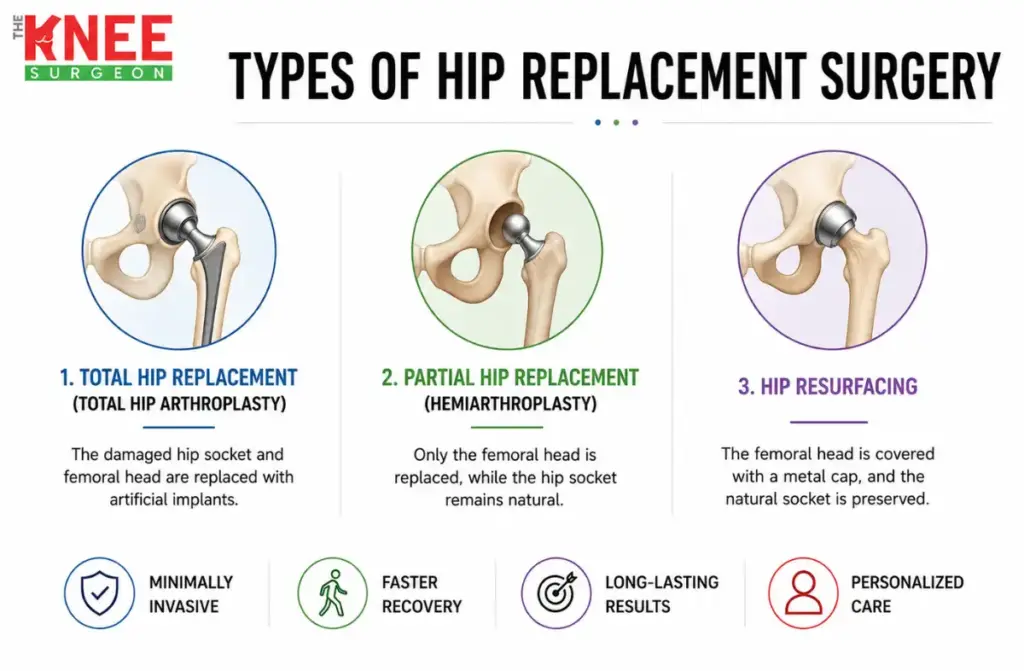
Total hip replacement involves replacing the damaged surfaces of the hip joint with artificial components. It may be considered for advanced arthritis, certain cases of avascular necrosis, and other conditions that severely damage the joint.
Partial hip replacement
In selected cases, particularly certain hip fractures, a partial replacement may be appropriate. The choice depends on the type of fracture, the condition of the joint, and the patient’s overall circumstances.
Revision hip replacement
Revision surgery may be considered when a previous hip replacement develops complications such as implant loosening, wear, infection, or dislocation. The cause of the problem must be assessed carefully because revision procedures can be more complex than an initial replacement.
Robotic-assisted hip replacement
Robotic-assisted systems may help surgeons plan and carry out specific aspects of joint replacement. Their use depends on the procedure, available equipment, and clinical suitability. Robotic assistance does not eliminate surgical risks or guarantee a particular outcome.
The choice between surgical techniques should follow an individual assessment rather than the assumption that one approach is suitable for everyone.
Meet Dr. Vijay Kumar Sohanlal
Dr. Vijay Kumar Sohanlal is an orthopaedic and joint replacement surgeon associated with hip and knee care in Chennai. His published professional profile lists an MBBS from Mysore University and a postgraduate qualification in Orthopaedics from Sri Ramachandra Medical College, Chennai.
His listed additional training includes fellowship training in joint replacement surgery at Breach Candy and Lilavati Hospital in Mumbai, advanced joint arthroplasty training at St. Josef Bruderkrankenhaus Hospital in Germany, and joint replacement and arthroscopy training at Sportsmed Hospital in Australia.
His professional background includes work in orthopaedics and joint replacement, including a previous clinical leadership role in robotic joint replacement at Medway Group of Hospitals and a senior joint replacement role at MGM Healthcare.
Dr. Vijay Kumar Sohanlal is also associated with MAHI Multispeciality Hospitals in Chennai. Patients seeking assessment for hip pain can discuss their symptoms, examination findings, and suitable treatment options during a consultation.
What to Expect During a Hip Consultation
A consultation provides an opportunity to understand the possible cause of the pain and discuss the next steps.
Patients can prepare by bringing previous X-rays or MRI reports, a list of current medications, details of earlier treatments, and information about when the symptoms began.
The consultation may include:
- Discussion of symptoms and medical history.
- Examination of hip movement and walking.
- Review of existing reports or recommendations for further investigations.
- Explanation of the likely diagnosis and any uncertainty that remains.
- Discussion of appropriate treatment options, including non-surgical care where suitable.
- Guidance on follow-up, activity modification, and rehabilitation.
Patients should feel able to ask questions about the proposed treatment, possible complications, expected recovery, and alternatives.
Recovery and Rehabilitation After Hip Treatment
Recovery depends on the underlying condition and the treatment received. Patients managed without surgery may need a tailored exercise programme, activity adjustments, or follow-up assessments.
After hip replacement, rehabilitation usually focuses on safe movement, walking, strength, and gradually returning to daily activities. The timing of each stage varies according to the procedure, the patient’s health, and progress during recovery.
Patients should follow the treating team’s instructions on wound care, mobility, medication, exercises, and follow-up visits. New or worsening pain, fever, wound changes, calf swelling, chest pain, or breathing difficulty requires prompt medical advice; chest pain or breathing difficulty warrants emergency assessment.
Conclusion
Hip pain can affect movement, sleep, and independence, but its cause and appropriate treatment vary from person to person. A clinical assessment helps identify the problem and determine whether medication, physiotherapy, activity modification, or surgery should be considered.
If you are looking for a Hip Orthopedic Doctor in Chennai, prepare details of your symptoms and previous investigations before the consultation. Discuss the diagnosis, treatment alternatives, potential risks, and expected recovery with the treating doctor so that decisions can be made with a clear understanding of your condition.
Read More: orthopedic surgeon in Tamil Nadu