Medically Reviewed by: Dr. Vijay Kumar Sohanlal, MBBS, MS (Orthopaedics), Orthopaedic & Joint Replacement Surgeon, Founder & Owner, MAHI Multispeciality Hospitals, Kilpauk, Chennai.
Last medically reviewed: August 2026
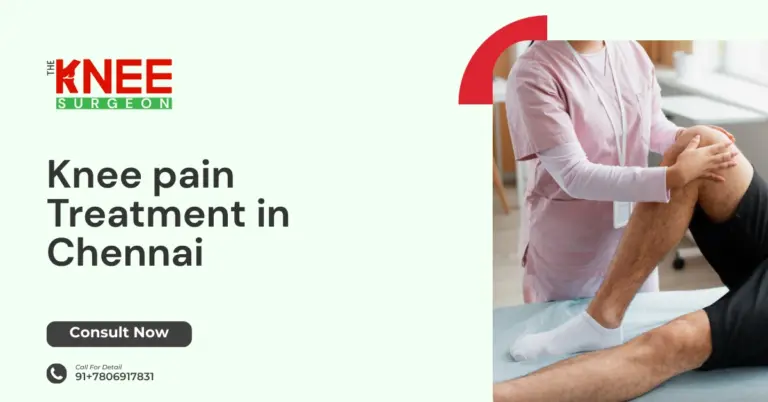
Knee pain has a way of creeping into every part of daily life without much warning. It might start as a dull ache after a long day on your feet, or a sharp twinge when you climb the stairs. Left unaddressed, it can quietly limit how much you walk, how you sit, and even how well you sleep. If this sounds familiar, finding the right knee pain treatment in Chennai is the most reliable way to get an accurate answer instead of guessing.
Understanding Knee Pain
The knee is the largest joint in the body and one of the hardest working. It carries your body weight through walking, climbing, bending and standing, which also makes it one of the joints most prone to wear, injury and inflammation. Knee pain is not a single condition. It is a symptom that can come from the cartilage, the ligaments, the tendons, the surrounding muscles, or the bone itself, and each of these needs a different approach to treatment.
This is exactly why self diagnosis rarely works well for knee pain. Two people with the same complaint of “pain when climbing stairs” can have completely different underlying causes and completely different treatment plans.
Common Causes of Knee Pain
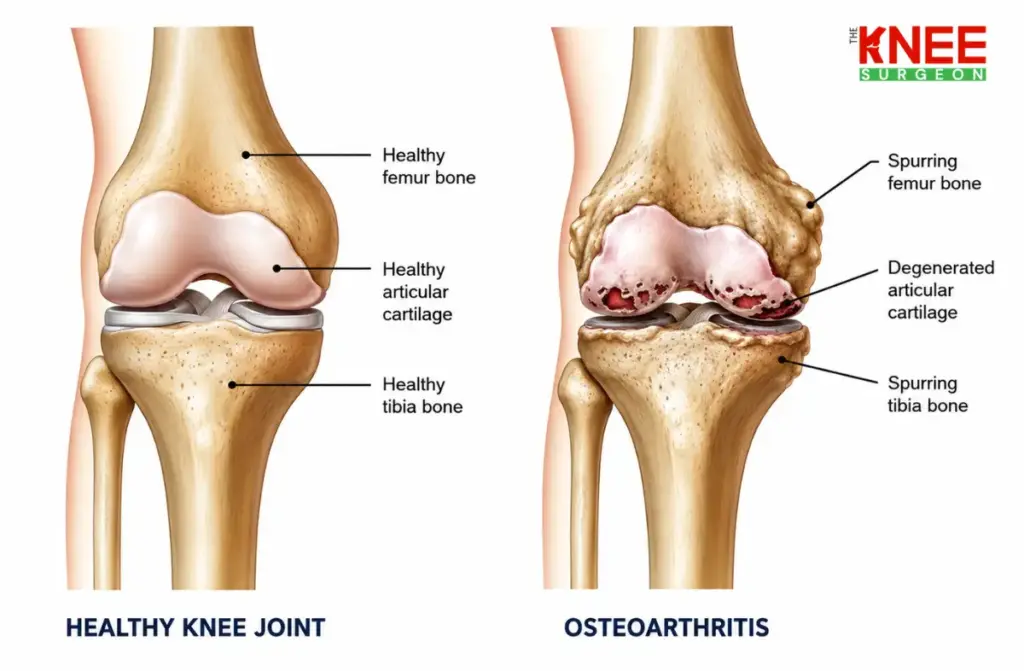
- Osteoarthritis and joint wear: The most frequent cause of knee pain in adults over 40. The cartilage that cushions the joint gradually thins, leading to stiffness, swelling and pain that often worsens through the day.
- Ligament and meniscus injuries: Sudden twists, sports related impacts or falls can damage the ACL, PCL, MCL or the meniscus. These injuries usually cause sudden pain along with swelling and a feeling of instability.
- Tendonitis and bursitis: Repetitive strain or overuse can inflame the tendons or the fluid filled sacs around the knee, causing localised pain that worsens with activity.
- Excess body weight: Every extra kilogram adds measurable load to the knee joint with every step, which speeds up cartilage wear over time.
- Rheumatoid arthritis and autoimmune conditions: Unlike osteoarthritis, this type of joint pain comes from the immune system attacking the joint lining, often causing swelling and stiffness in both knees at once.
- Old, poorly healed injuries: A previous fracture or ligament tear that was never properly rehabilitated can resurface as chronic pain years later.
Signs You Should Not Ignore
Most people wait far too long before seeing a specialist for knee pain. Book a consultation sooner rather than later if you notice:
- Pain that continues for more than two to three weeks despite rest
- Visible swelling or a knee that feels warm to the touch
- A grinding, popping or clicking sensation with movement
- A knee that gives way or feels unstable while walking
- Pain that wakes you up at night or is present even at rest
- Difficulty bearing full weight on the leg
Any one of these on its own is worth a proper evaluation. Together, they usually point to something that needs more than rest and painkillers.
How Knee Pain is Diagnosed
A reliable diagnosis is the foundation of effective knee pain treatment in Chennai, and it typically involves a few clear steps.
- Clinical history: Understanding when the pain started, what makes it worse, any past injuries and your general activity level helps narrow down the likely cause before any test is even ordered.
- Physical examination: Checking the knee’s range of motion, stability, swelling and tenderness gives immediate clues about which structure is affected.
- Imaging: An X-ray is usually the first step and shows joint space narrowing, bone spurs or fractures. An MRI is used when soft tissue structures such as ligaments, cartilage or the meniscus need a closer look.
- Blood tests: These are ordered only when an autoimmune condition, gout or infection is suspected, to confirm the diagnosis before starting treatment.
Non Surgical Knee Pain Treatment Options
Most patients are relieved to learn that surgery is rarely the first option. A well planned non surgical approach resolves the majority of knee pain cases when started early.
- Medications: Short term use of anti inflammatory medication can reduce swelling and pain enough to allow physiotherapy to begin comfortably.
- Physiotherapy: A structured physiotherapy program strengthens the muscles supporting the knee, improves flexibility and corrects movement patterns that may be contributing to the pain. This is usually the single most effective long term treatment for chronic knee pain.
- Bracing and support: A knee brace or support can offload pressure from a specific part of the joint, which is particularly useful for ligament injuries or early stage arthritis.
- Injections: Corticosteroid injections reduce inflammation quickly for flare ups, while hyaluronic acid injections help cushion the joint in patients with osteoarthritis. Both are used selectively, not as a default treatment.
- Regenerative options: Platelet rich plasma therapy and similar regenerative treatments are sometimes recommended for patients looking to delay surgery or support healing after certain injuries. These work best as part of a broader treatment plan rather than as a standalone fix.
- Lifestyle and weight management: Reducing excess weight and adjusting daily activity levels can noticeably reduce knee strain, particularly for patients with early osteoarthritis.
When Surgery Becomes Necessary
Surgery is considered only when non surgical treatment has genuinely been tried and has not given enough relief, or when there is significant structural damage such as a complete ligament tear, a large meniscus tear or advanced arthritis.
Depending on the diagnosis, this can range from a minimally invasive arthroscopic procedure to repair torn cartilage or ligaments, to a partial or total knee replacement for advanced joint damage. The right option depends entirely on what imaging and examination reveal, not on age or how long the pain has lasted. Patients considering surgery are also welcome to ask about robotic assisted techniques, which can improve implant alignment in more complex cases.
Preventing Knee Pain from Returning
- Keep your weight within a healthy range to reduce daily load on the joint
- Stay active with low impact exercises such as walking, cycling or swimming
- Warm up properly before sports or high intensity activity
- Strengthen the muscles around the knee rather than relying on the joint alone
- Wear appropriate footwear, particularly if you are on your feet for long hours
- Do not ignore mild pain that keeps returning, since early treatment is simpler than late treatment
Why Patients Choose Dr. Vijay Kumar Sohanlal
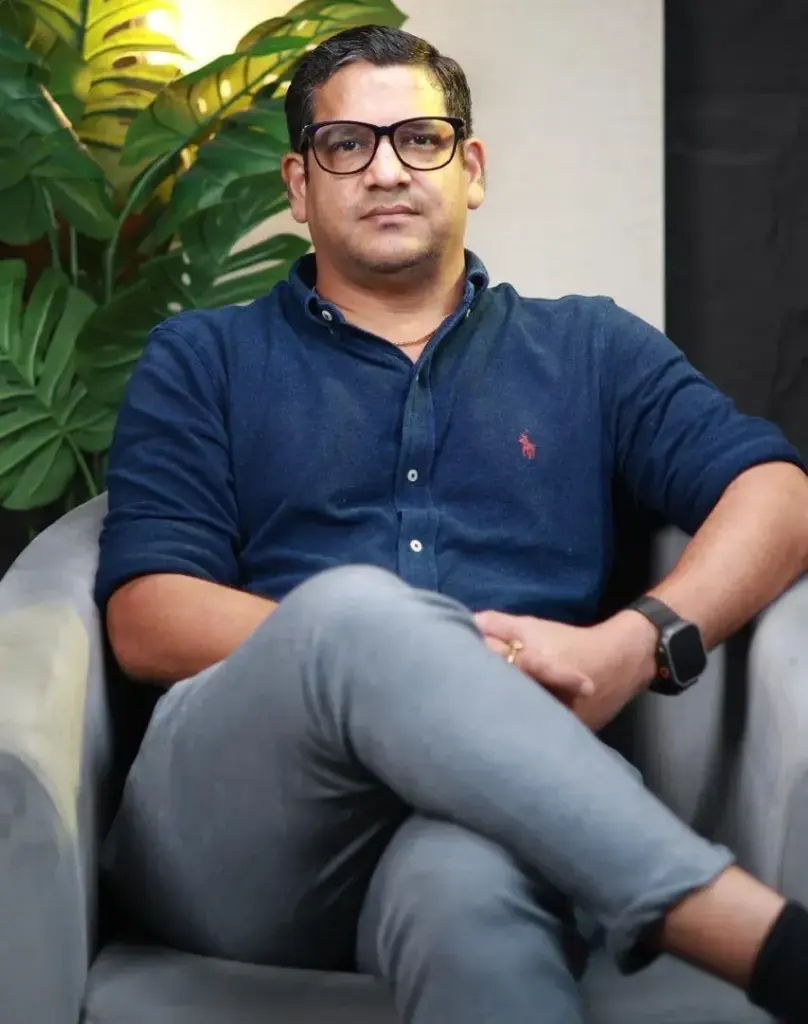
Dr. Vijay Kumar Sohanlal is an orthopaedic and joint replacement surgeon with more than 18+ years of clinical experience. He completed his MBBS from Mysore University and his MS in Orthopaedics from Sri Ramachandra Medical College, Chennai, followed by fellowship training in joint replacement and arthroplasty at centres in India, Germany and Australia.
He is the Founder and Owner of MAHI Multispecialty Hospital, Kilpauk, where he leads the Department of Orthopaedics, and he also practises at MGM Healthcare, Aminjikarai, as a Senior Joint Replacement and Orthopaedic Surgeon. Over 12,000 patients have been treated under his care to date, spanning conditions from early stage knee pain to complex revision surgery.
- Accurate, honest diagnosis: Every treatment plan starts with identifying the real cause of the pain, not just treating the symptom.
- Non surgical first approach: Surgery is recommended only when conservative treatment has been properly tried and has not worked.
- Full spectrum expertise: From physiotherapy guidance and injections to arthroscopy and robotic assisted knee replacement, care is matched to the condition rather than offering a single default treatment.
- Independently verified reviews: 4.5 to 4.8 star ratings across Google, Justdial and Practo from real patients.
- Continuity of care: Structured follow up appointments to track recovery rather than a single visit and discharge
Conclusion
Knee pain rarely improves on its own once it becomes persistent, but it also rarely needs surgery as a first step. The right knee pain treatment in Chennai starts with an accurate diagnosis, followed by a plan built around your specific cause, whether that means physiotherapy, medication, injections or, in select cases, surgery. Dr. Vijay Kumar Sohanlal brings 18+ years of orthopaedic experience and a non surgical first approach to help you move comfortably again.
Read More: Hip Orthopedic Doctor in Chennai