PRP Treatment for Knee Arthritis

Learn how PRP Treatment for Knee Arthritis reduces pain, promotes healing, improves joint function, and supports long-term knee health naturally.
PRP Treatment for Knee Arthritis
Contents

Knee arthritis rarely begins as a sudden medical condition. It develops gradually through subtle changes that are easy to overlook, mild stiffness after resting, occasional discomfort while walking, or a slight reduction in movement that many people simply attribute to aging.

Over time, however, these seemingly minor symptoms begin to reshape everyday life. Walking shorter distances becomes the norm, climbing stairs requires extra effort, standing for prolonged periods becomes uncomfortable, and movements that once felt effortless start demanding conscious planning.

What makes knee arthritis particularly challenging is not pain alone, but the gradual loss of confidence in the joint. Many individuals begin avoiding movement altogether, fearing that physical activity will worsen their symptoms. Unfortunately, reduced activity often leads to weaker muscles, greater stiffness, and further decline in joint function.

This is where modern regenerative orthopedics is changing the treatment landscape. Rather than focusing solely on temporary symptom relief, PRP treatment for knee arthritis aims to improve the biological environment within the knee joint by utilizing the body’s own healing mechanisms. For carefully selected patients with early to moderate arthritis, Platelet-Rich Plasma therapy offers an evidence supported approach that may reduce pain, improve function, and help preserve the natural joint for longer.

Understanding Knee Arthritis

Knee arthritis is more than the gradual wearing away of cartilage. It is a progressive condition that affects nearly every structure within the joint, including cartilage, synovial tissue, joint lubrication, supporting bone, and the body’s inflammatory response.

These biological and mechanical changes occur over many years, gradually reducing the knee’s ability to move smoothly and absorb everyday forces. Understanding what happens inside the joint helps explain why pain develops, why stiffness increases over time, and why early intervention through PRP injections for knee pain can make a meaningful difference.

Cartilage Degeneration: Loss of the Joint’s Protective Cushion

Articular cartilage is the smooth, resilient tissue that covers the ends of bones inside the knee joint. It allows the joint surfaces to glide effortlessly while absorbing impact during walking, running, climbing stairs, and other weight bearing activities.

In knee arthritis, this protective cartilage gradually becomes thinner, rougher, and less elastic due to aging, repeated mechanical stress, previous injuries, and ongoing biological changes.

As cartilage deteriorates:

  • Shock absorption becomes less effective.
  • Friction between joint surfaces increases.
  • Everyday movements become progressively more uncomfortable.
  • Direct pressure on the underlying bone gradually increases.

Eventually, this loss of cushioning becomes one of the primary reasons patients experience persistent pain and reduced mobility.

Chronic Inflammation: The Silent Driver of Disease Progression

Knee arthritis is not simply a mechanical problem, it is also an inflammatory condition.

The synovial membrane, which lines the inside of the joint capsule and produces lubricating fluid, becomes persistently inflamed. Unlike the short term inflammation that occurs after an injury, this low grade inflammatory response can continue for months or years.

Inflamed synovial tissue releases inflammatory proteins and chemical mediators that:

  • Increase pain sensitivity.
  • Accelerate cartilage breakdown.
  • Promote swelling inside the joint.
  • Contribute to ongoing stiffness and discomfort.

This creates a self perpetuating cycle where inflammation worsens tissue damage, and tissue damage further fuels inflammation.

Synovial Fluid Dysfunction: When the Joint Loses Its Natural Lubrication

Healthy knees rely on synovial fluid to lubricate joint surfaces and minimize friction during movement.

In arthritis, both the quality and protective properties of this fluid gradually decline.

As lubrication becomes less effective:

  • Joint surfaces move less smoothly.
  • Friction during movement increases.
  • Morning stiffness becomes more noticeable.
  • Patients may experience grinding or clicking sensations while walking.

Reduced lubrication also places additional stress on already damaged cartilage, accelerating the degenerative process.

Mechanical Stress on Bone: When Cartilage Can No Longer Protect the Joint

As cartilage loss progresses, the underlying bone begins to bear increasing mechanical loads that it was never designed to absorb directly.

This increased pressure can result in:

  • Microdamage within the bone.
  • Pain during standing and walking.
  • Thickening of the underlying bone.
  • Formation of bone spurs (osteophytes).
  • Progressive reduction in joint flexibility.

These structural adaptations contribute significantly to the stiffness and reduced range of motion commonly experienced in advancing arthritis.

Emotional Takeaway

Knee arthritis is not simply “wear and tear.” It is a complex biological condition involving cartilage loss, chronic inflammation, altered lubrication, and changing joint mechanics. Understanding these processes highlights why PRP treatment for knee arthritis focuses not only on relieving pain but also on preserving joint health for as long as possible.

What is PRP Therapy for Knee Arthritis?

Platelet-Rich Plasma (PRP) is an autologous regenerative treatment created from a patient’s own blood. It contains a concentrated number of platelets enriched with naturally occurring growth factors and signaling proteins that support tissue repair and healing. As a form of Platelet-Rich Plasma for osteoarthritis, it has become one of the more widely discussed options among patients looking for alternatives to surgery.

Unlike pain medications that temporarily mask symptoms or steroid injections that primarily suppress inflammation, PRP seeks to improve the biological environment within the knee joint. Its goal is not to regenerate completely lost cartilage but to encourage healthier tissue activity, regulate chronic inflammation, and support the body’s natural repair processes.

Because PRP is prepared using the patient’s own blood, the risk of allergic reactions or immune rejection is extremely low, making Platelet-Rich Plasma for osteoarthritis a well tolerated option for appropriately selected patients.

PRP Preparation Process

One of the greatest advantages of PRP therapy is that the treatment is personalized. Every injection is prepared using the patient’s own blood immediately before the procedure, ensuring that the therapeutic material is entirely autologous.

PRP Treatment for Knee Arthritis
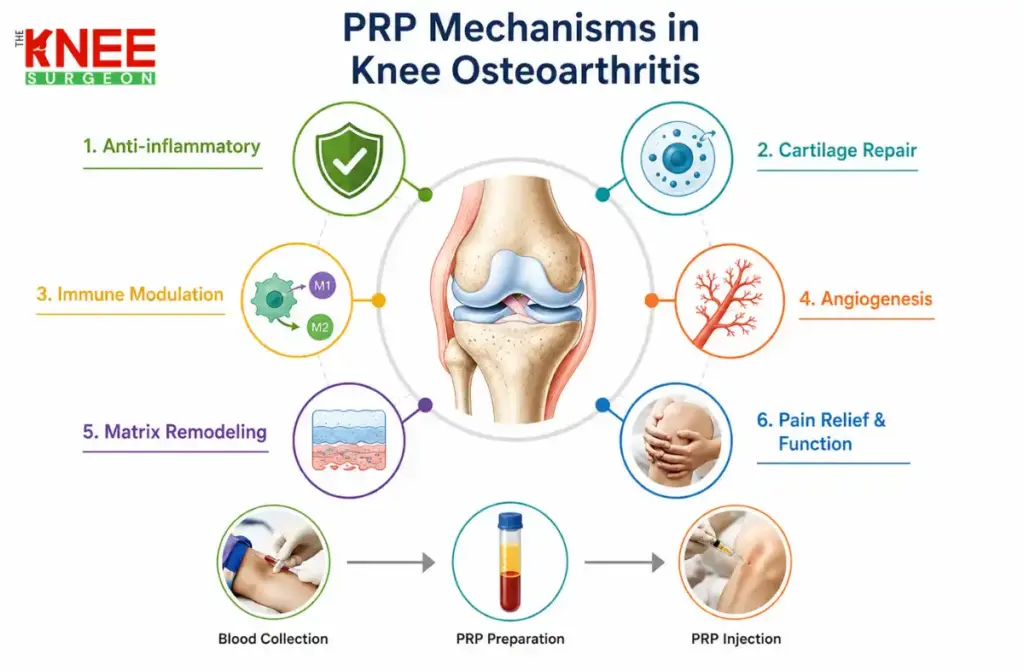
  • Blood Collection: A small quantity of blood is drawn under sterile clinical conditions, similar to a routine blood test. Since the blood comes directly from the patient, compatibility is naturally ensured.
  • Centrifugation: The collected blood is placed inside a specialized centrifuge that spins at high speed. This process separates the blood into distinct layers according to density, allowing clinicians to isolate the platelet rich plasma from red blood cells and most white blood cells.
  • Platelet Concentration: The platelet rich portion is carefully extracted. Because platelets contain numerous biologically active growth factors, concentrating them increases the amount of regenerative signaling molecules delivered to the affected joint.
  • PRP Refinement: The isolated plasma is prepared under controlled sterile conditions to maintain platelet integrity and maximize therapeutic quality before administration.
  • Platelet Activation: Some treatment protocols include platelet activation before injection, encouraging the early release of growth factors once the PRP reaches the target tissue. The decision depends on the clinical protocol and the treating specialist’s assessment.
  • Image Guided Joint Injection: The prepared PRP injections for knee pain are delivered directly into the knee joint. Whenever appropriate, ultrasound guidance may be used to improve injection accuracy and ensure precise delivery into the affected joint space.
  • Immediate Observation: Patients are monitored briefly following the procedure. Some individuals notice mild soreness, temporary heaviness, or slight swelling around the knee. These effects are generally short lived and often reflect the body’s early biological response rather than a complication.
  • Early Biological Response: During the first 24 to 48 hours, patients are usually advised to rest the joint while avoiding strenuous physical activity. During this period, growth factors begin interacting with local tissues and initiating early cellular communication involved in the healing process.
  • Progressive Healing Phase: Unlike treatments that provide immediate pain relief, PRP injections for knee pain work gradually. Over the following weeks, biological processes within the joint continue to evolve. As inflammation becomes better regulated and tissue repair mechanisms are activated, many patients experience progressive improvements in pain, mobility, and everyday function.

How PRP Works in Knee Arthritis

PRP therapy works by supporting the body’s own biological healing mechanisms rather than replacing damaged tissue. The concentrated platelets release numerous growth factors and signaling molecules that influence inflammation, tissue repair, and the overall joint environment.

Inflammation Modulation: Restoring Biological Balance

Instead of completely suppressing inflammation, PRP helps regulate chronic inflammatory activity within the joint. This balanced response creates a healthier environment that supports healing while reducing the ongoing cycle of tissue damage.

Growth Factor Activation: Stimulating Cellular Repair

Platelets release multiple bioactive growth factors that communicate with surrounding cells, encouraging repair processes within cartilage, synovial tissue, and other supporting joint structures.

These signals help promote healthier tissue activity and contribute to improved joint function over time.

Gradual Pain Reduction

Pain relief following PRP therapy is typically progressive rather than immediate. As inflammation decreases and joint function improves, patients often notice a gradual reduction in discomfort during walking, climbing stairs, and other daily activities.

Improved Synovial Function

PRP may help enhance the biological quality of synovial fluid, allowing smoother joint movement and reducing friction between cartilage surfaces. Improved lubrication contributes to better flexibility and greater comfort during routine movement.

Slowing Disease Progression

Although PRP cannot reverse advanced arthritis or regenerate completely lost cartilage, it may help slow further degeneration by improving the biological environment within the knee. This joint preserving effect is one of the primary reasons PRP is most valuable during the earlier stages of knee arthritis.

Expert Insight

The greatest strength of arthritis treatment of the knee using Platelet-Rich Plasma lies in its ability to support the body’s own healing biology rather than replacing it. When combined with appropriate rehabilitation, weight management, and activity modification, PRP can become an important component of a comprehensive joint preservation strategy for selected patients.

PRP vs Other Knee Arthritis Treatments

Knee arthritis can be managed through several treatment approaches, each designed to address different stages of the condition and specific patient needs. Some therapies primarily relieve symptoms, while others aim to improve joint function or preserve the natural joint for as long as possible.

PRP therapy stands apart because its goal is to optimize the biological environment inside the knee rather than simply masking pain. However, it is not a replacement for every treatment. The most appropriate option depends on the severity of arthritis, the patient’s symptoms, activity level, and overall health.

TreatmentPrimary MechanismRelief OnsetLong Term EffectBest Clinical Role
Pain MedicationsReduce pain perceptionFastTemporaryShort term symptom control
Corticosteroid InjectionsSuppress inflammationRapidWeeks to monthsAcute inflammatory flare management
Hyaluronic Acid InjectionsImprove joint lubricationGradualTemporaryMild to moderate symptom relief
PhysiotherapyStrengthen muscles and improve joint mechanicsGradualExcellent with consistencyFoundation of arthritis management
PRP TherapySupports biological healing and inflammation regulationProgressiveLonger lasting in selected patientsEarly to moderate arthritis and joint preservation
Knee Replacement SurgeryReplaces damaged joint surfacesAfter recovery periodLong termAdvanced end stage arthritis

Clinical Perspective

Rather than competing with one another, these treatments often complement each other. Physiotherapy remains an essential component of arthritis management, while PRP treatment for knee arthritis may be integrated into a broader treatment plan for appropriately selected patients before surgical intervention becomes necessary.

Who is an Ideal Candidate for PRP Therapy?

The success of PRP therapy depends largely on selecting the right patient. Because PRP works by stimulating the body’s natural healing response, the knee joint must still retain sufficient biological potential to respond to treatment.

Patients who generally benefit the most include:

  • Individuals with early to moderate knee arthritis. PRP demonstrates the best outcomes when cartilage loss is partial rather than complete. During these stages, the joint still contains enough healthy tissue to respond to regenerative signaling.
  • Patients with persistent symptoms despite conservative treatment. Individuals who continue to experience pain despite medications, physiotherapy, weight management, or activity modification may be suitable candidates for PRP as part of a comprehensive treatment strategy.
  • Patients looking to delay knee replacement surgery. For suitable patients, PRP may help improve symptoms and preserve joint function, allowing surgery to be postponed while maintaining an active lifestyle.
  • Active individuals seeking better functional recovery. Patients who wish to remain physically active often choose PRP because the treatment focuses on improving joint health rather than simply suppressing pain.

Emotional Takeaway

The ideal time to consider Platelet-Rich Plasma for osteoarthritis is not when arthritis has reached its most advanced stage, but when the joint still has the capacity to respond to biological healing.

Who Should Not Choose PRP Therapy?

Although PRP is considered safe for many patients, it is not appropriate in every clinical situation. Careful evaluation by an orthopedic specialist is essential before treatment is recommended.

PRP may not be suitable for patients with:

  • Advanced bone on bone knee arthritis, where very little cartilage remains.
  • Active infection within or around the knee joint.
  • Certain blood or platelet disorders that affect normal platelet function.
  • Severe bleeding disorders or patients taking specific anticoagulant medications, depending on individual clinical assessment.
  • Uncontrolled systemic illnesses, where medical stabilization should occur before elective regenerative procedures.
  • Poor overall regenerative potential, as determined by the treating physician after clinical evaluation.

Not every patient who experiences knee pain requires PRP injections for knee pain. Careful patient selection is one of the most important factors influencing successful outcomes.

Benefits of PRP Therapy in Knee Arthritis

The value of arthritis treatment of the knee using Platelet-Rich Plasma extends beyond temporary pain reduction. By improving the biological environment within the knee joint, it aims to support better movement, preserve existing joint tissue, and enhance long term function.

A Natural Regenerative Treatment

Because PRP is prepared from the patient’s own blood, it utilizes naturally occurring platelets and growth factors without introducing synthetic medications into the joint.

This significantly reduces the likelihood of allergic reactions or immune rejection while supporting the body’s intrinsic healing mechanisms.

Gradual Improvement in Mobility

As inflammation becomes better regulated and joint function improves, many patients experience:

  • Easier walking
  • Improved stair climbing
  • Reduced morning stiffness
  • Better flexibility
  • Greater confidence during everyday movement

Rather than producing sudden improvement, PRP typically supports progressive functional recovery over several weeks.

Reduced Dependence on Long Term Pain Medication

Many patients seek PRP because they wish to reduce frequent reliance on pain relieving medications. While medication may still be required in some individuals, successful PRP therapy can contribute to improved symptom control as part of a broader treatment strategy, potentially reducing long term dependence on analgesics.

Potential to Delay Surgical Intervention

In carefully selected patients with early to moderate arthritis, improving the joint’s biological environment may help preserve function and postpone the need for knee replacement surgery. Although PRP does not eliminate the possibility of future surgery, delaying major surgery while maintaining quality of life is often considered a meaningful clinical outcome.

Improved Confidence in Movement

Persistent pain often causes patients to limit activity out of fear of worsening their condition. As symptoms improve, many individuals regain confidence in walking, exercising, and participating in everyday activities, an important psychological benefit that encourages continued mobility and supports overall joint health.

you make the most of the joint you still have by preserving function and improving everyday comfort.

What Does Current Clinical Evidence Say About PRP?

Growing clinical research suggests that this arthritis treatment of the knee using Platelet-Rich Plasma may provide meaningful improvements in pain and physical function for selected patients with early to moderate knee osteoarthritis.

Current evidence indicates that PRP can:

  • Improve pain scores in many appropriately selected patients.
  • Enhance functional outcomes when combined with exercise based rehabilitation.
  • Offer longer lasting symptom improvement than some injection therapies in selected cases.
  • Reduce inflammatory activity within the joint environment.
  • Help delay, rather than eliminate, the need for knee replacement in some individuals.

However, clinical outcomes are influenced by several factors, including the stage of arthritis, the method used to prepare PRP, injection technique, rehabilitation, and individual biological response.

Expert Insight

Platelet-Rich Plasma for osteoarthritis should be viewed as one component of a comprehensive arthritis management plan, not a standalone cure. The strongest outcomes are typically achieved when regenerative therapy is combined with weight management, physiotherapy, strength training, and long term lifestyle modifications.

Limitations of PRP Therapy

Understanding what PRP cannot achieve is just as important as understanding its benefits. Setting realistic expectations allows patients to make informed treatment decisions.

Not Effective for End Stage Arthritis

PRP cannot rebuild completely destroyed cartilage or correct severe joint deformity. Patients with advanced bone on bone arthritis generally experience less predictable improvement and are often better served by surgical treatment.

Results Vary Between Individuals

Every patient’s biological healing response is different. Factors such as age, arthritis severity, metabolic health, activity level, body weight, and overall joint condition all influence treatment outcomes.

Improvement Takes Time

Unlike corticosteroid injections or pain medication, PRP does not provide immediate symptom relief. Most patients begin noticing improvement over several weeks, with continued progress occurring over the following months as biological healing continues.

Some patients achieve satisfactory results after a single injection, while others may benefit from a planned series of treatments depending on clinical response and disease severity.

Treatment recommendations should always be individualized rather than standardized.

Emotional Takeaway

PRP is not a shortcut to recovery, it is an investment in the joint’s natural healing capacity. The best outcomes are achieved when treatment is supported by realistic expectations, consistent rehabilitation, and long term joint care.

Lifestyle Support After PRP Therapy

PRP injections for knee pain initiate the body’s natural healing process, but long term results depend just as much on how you care for your knee afterward. Healthy lifestyle choices help protect the joint, support recovery, and maximize the benefits of treatment.

Stay Physically Active, The Right Way

Low impact activities keep the knee mobile without placing excessive stress on the joint.

  • Walking on even surfaces
  • Swimming or water exercises
  • Stationary cycling
  • Gentle stretching and mobility exercises

Regular movement improves flexibility, reduces stiffness, and promotes healthier joint function.

Strengthen the Muscles Around the Knee

Strong muscles help absorb pressure that would otherwise be placed directly on the joint.

Focus on strengthening the:

  • Quadriceps
  • Hamstrings
  • Gluteal muscles
  • Calf muscles

A structured physiotherapy program can improve stability, reduce pain, and support long term recovery.

Maintain a Healthy Weight

Even modest weight loss reduces pressure on the knee and can significantly improve mobility and comfort. Maintaining a healthy weight also supports better long term outcomes after PRP therapy.

Support Healing Through Nutrition

A balanced diet rich in lean protein, fruits, vegetables, whole grains, and omega 3 fatty acids helps create an internal environment that supports tissue repair while reducing chronic inflammation.

Takeaway: PRP works best when paired with consistent rehabilitation, healthy movement, and long term lifestyle care.

Recovery Timeline

Recovery PhaseWhat to Expect
First 24 to 48 HoursRest the knee and avoid strenuous activity.
First 2 to 4 WeeksGradually resume daily activities and begin rehabilitation if advised.
After 4 to 12 WeeksProgressive improvement in pain, flexibility, and overall knee function.

Expert Insight

Arthritis treatment of the knee using Platelet-Rich Plasma delivers the greatest benefit when used early, before arthritis causes extensive structural damage. It should be viewed as a joint preservation strategy rather than a replacement for surgery. When combined with physiotherapy, weight management, and regular exercise, PRP can play an important role in maintaining mobility and delaying disease progression.

Meet Our Specialist

Dr. Vijay Kumar Sohanlal, a trusted orthopaedic and joint replacement surgeon based in Chennai, brings over 18+ years of experience in treating knee arthritis and joint related conditions. With advanced fellowship training in Germany and Australia, and prior roles as Senior Joint Replacement Specialist at MGM Healthcare and Clinical Lead for Robotic Joint Replacement at Medway Hospitals, Dr. Vijay Kumar Sohanlal now leads regenerative and joint preservation care, including PRP therapy, at MAHI Multispecialty Hospital, Kilpauk, Chennai.

His patient centered approach focuses on exploring every appropriate non surgical option, including Platelet-Rich Plasma therapy, before recommending surgical intervention, helping patients preserve their natural knee and stay active for as long as possible. Patients interested in exploring whether PRP treatment for knee arthritis is right for them can consult Dr. Vijay for a personalized evaluation and treatment plan.

Final Thoughts

Knee arthritis doesn’t have to mean giving up the activities you enjoy or accepting pain as an inevitable part of aging. For patients with early to moderate knee arthritis, PRP therapy offers a regenerative approach that goes beyond temporary symptom relief by supporting the joint’s natural healing environment.

While it cannot reverse advanced arthritis, it can help reduce pain, improve movement, and preserve joint function when combined with the right rehabilitation and lifestyle measures. The greatest goal of PRP isn’t simply to treat the knee, it’s to help you move with greater comfort, stay active with confidence, and preserve your natural joint for as long as possible. Don’t let knee pain limit your life. Book an appointment today for expert evaluation and personalized treatment.

Frequently Asked Questions

Most patients undergoing PRP treatment for knee arthritis notice gradual improvement within 3 to 6 weeks, with continued progress over the next few months as the joint responds to biological healing.

No. PRP injections for knee pain help reduce symptoms and may slow disease progression, but they do not cure arthritis. The goal of Platelet-Rich Plasma for osteoarthritis is joint preservation, not a permanent fix.

Depending on the severity of arthritis and individual response, 1 to 3 sessions of PRP injections for knee pain may be recommended by your treating specialist.

No. It may help delay surgery in suitable patients but cannot replace knee replacement in advanced arthritis.

Yes. Since PRP is prepared from your own blood, it has a low risk of allergic or immune reactions.

Many patients experience improvement for 6–12 months or longer, especially when combined with rehabilitation and healthy lifestyle practices.

Learn More