
Spinal fractures can make everyday movements painful and exhausting, especially when the vertebra loses its natural strength. Vertebroplasty is a minimally invasive treatment designed to stabilize these fractures and ease discomfort. In vertebroplasty for spinal fracture, a special medical cement is injected into the damaged vertebra to support the bone from within, helping patients regain comfort and confidence in daily life.
What is a Vertebroplasty?
Vertebroplasty is a modern spine procedure used to treat painful vertebral compression fractures that do not heal with rest or medication.
Understanding Vertebroplasty
During the procedure, a needle is guided into the fractured vertebra under imaging guidance, and medical-grade cement is injected to strengthen the bone. Vertebroplasty for spinal fracture is commonly recommended for fractures caused by osteoporosis, minor trauma, or spinal weakening conditions.
Who is Vertebroplasty Meant For?
This procedure is suitable for patients experiencing persistent back pain that limits mobility. For example, elderly individuals with fragile bones or patients with injury-related spinal fractures often experience noticeable relief after vertebroplasty.
How Vertebroplasty Treats Spinal Fractures
Vertebroplasty for spinal fracture works by stabilizing the broken vertebra and preventing further collapse, allowing the spine to regain strength and balance.
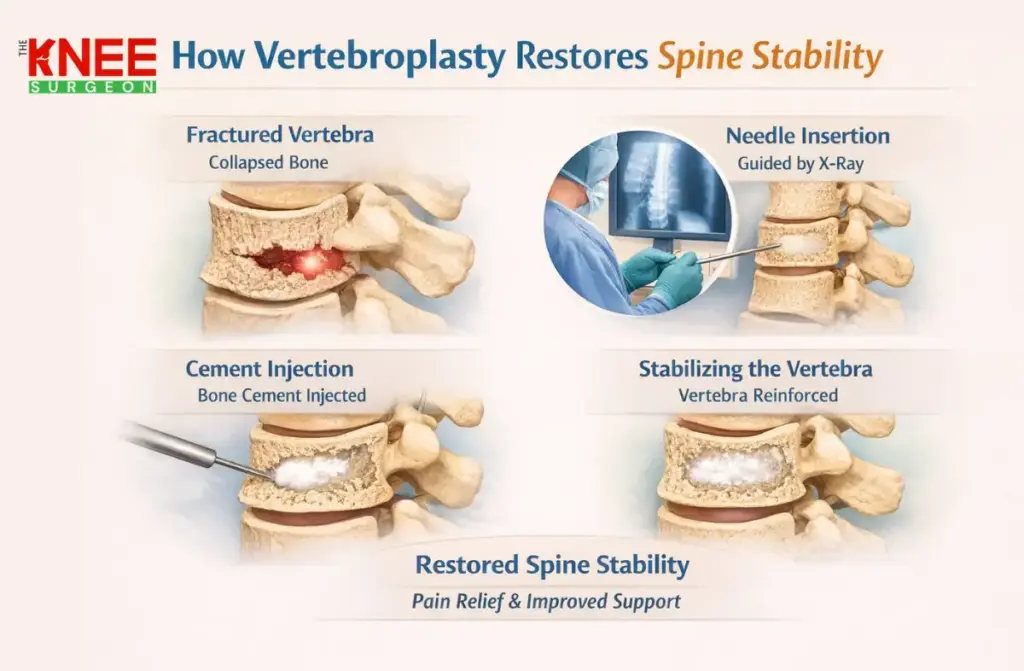
Stabilization and Pain Control: The injected cement hardens quickly inside the fractured bone, reducing painful movements and restoring structural support. This technique, sometimes referred to as spine cement Surgery, helps patients experience faster pain relief and improved posture.
Preparing for a Vertebroplasty Procedure
Careful preparation helps ensure a smooth and successful vertebroplasty for spinal fracture procedure.
- Medical Evaluation and Diagnosis: The doctor evaluates symptoms, physical health, and fracture severity to confirm suitability for treatment.
- Imaging Tests (X-ray, MRI, or CT Scan): Imaging helps identify the exact fracture location and guides accurate bone cement fracture repair planning.
- Discussing Medical History and Medications: Patients should share details about chronic illnesses, allergies, and current medications.
- Blood Tests and Pre-Procedure Clearance: Routine tests confirm the body is prepared for anesthesia and the procedure.
- Medication Adjustments Before Surgery: Blood thinners or certain medications may need temporary adjustments.
- Arranging Transportation and Post-Procedure Care: Since vertebroplasty is usually a day-care procedure, arranging assistance after discharge is advised.
- Pre-Procedure Guidelines from Your Doctor: Following fasting and medication instructions helps reduce complications.
Recovery After Vertebroplasty
Recovery from vertebroplasty for spinal fracture is usually quick and comfortable for most patients.
- Immediate Post-Procedure Care: Patients are monitored briefly to ensure stability and pain control.
- Pain Relief and Comfort: Many experience pain relief within a day, positively influencing overall vertebroplasty recovery time.
- Activity and Mobility Guidelines: Light activities are encouraged, while heavy lifting should be avoided initially.
- Follow-Up Appointments: Scheduled visits help monitor healing and spinal alignment.
- Long-Term Recovery Tips: Maintaining good posture, bone health, and gentle exercises supports lasting benefits.
Advantages of Vertebroplasty for Spine Fracture
One of the biggest benefits is the shorter vertebroplasty recovery time, allowing patients to resume normal life sooner.
- Rapid Pain Relief: Pain often reduces significantly within the first few days.
- Minimally Invasive Treatment: The procedure requires only a small incision, reducing tissue damage.
- Improved Spine Stability: By strengthening the vertebra, spine cement Surgery helps restore spinal balance.
- Faster Recovery Time: Most patients return to daily activities much faster than with traditional surgery.
- Reduced Dependence on Pain Medication: Effective pain relief lowers long-term medication use.
- Enhanced Mobility and Daily Function: Patients move more freely and comfortably.
- Short Hospital Stay: Most vertebroplasty procedures are completed within a single day.
Expert Care by Dr. Sohanlal
Dr. Sohanlal is widely recognized for his leadership in advanced hip joint, spine replacement, and fracture care, offering both robotic and non-robotic techniques to achieve precise and dependable outcomes. His expertise also includes robotic and navigation-assisted knee replacement along with comprehensive trauma care, where timely intervention and accurate surgical management play a vital role in restoring mobility and function.
His patient-first philosophy emphasizes accessibility, affordability, and personalized care. By following global best practices and ethical standards, he creates a supportive environment where advanced treatment and compassionate care work together to ensure long-term recovery and well-being.
Possible Risks and Complications
Although generally safe, vertebroplasty for spinal fracture may involve certain risks.
- Cement Leakage: Small cement leaks can occur but rarely cause symptoms.
- Infection Risk: Infection is uncommon when proper sterile techniques are followed.
- Nerve Irritation or Damage: Improper placement during spine cement Surgery may irritate nearby nerves.
- Bleeding or Bruising: Minor bleeding at the injection site may occur temporarily.
- Allergic Reaction to Anesthesia: Some patients may react to medications used during the procedure.
- Incomplete Pain Relief: A small number of patients may experience partial relief.
- Adjacent Vertebral Fractures: Weak surrounding bones may fracture if bone health is not addressed.
Limitations and Considerations of Vertebroplasty
While effective, vertebroplasty for spinal fracture has certain limitations to consider.
- Not Suitable for All Fractures: Some fracture patterns may not respond well to bone cement fracture repair.
- Limited Effectiveness in Chronic Fractures: Older fractures may show reduced improvement compared to recent injuries.
- Does Not Treat Underlying Bone Weakness: The procedure stabilizes fractures but does not cure osteoporosis.
- Possibility of Additional Treatments: Medications or therapy may be required alongside bone cement fracture repair.
- Individual Health Factors and Risks: Age, bone density, and overall health influence outcomes.
- Cost and Insurance Considerations: Coverage varies depending on medical necessity and policy terms.
Conclusion
Dr. Vijay Sohanlal is a highly skilled orthopedic specialist, robotic surgeon, and expert in trauma care, known for delivering advanced and patient-centered treatment solutions. His extensive experience in spine, joint replacement, and fracture management allows him to address complex conditions with confidence and precision. With a strong focus on ethical practice and compassionate care, he ensures every patient receives personalized attention. For those considering vertebroplasty for spinal fracture, expert guidance can significantly improve recovery outcomes. Under his care, patients benefit from modern techniques combined with a humane approach. His commitment to innovation and accessibility makes advanced orthopedic care achievable. Choosing the right specialist can be the key to lasting relief and restored mobility.
Read More: Orthopedic Trauma Care in Chennai.